
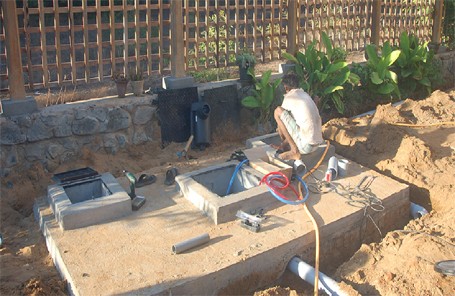
Wastewater from domestic bathrooms, laundries, and kitchen outlets is called grey water. Statistics say that around 30 to 50 percent of the wastewater discharged to the sewer is contributed by grey water. Therefore, by recycling it, we can significantly reduce the load on the infrastructure.
With Cleantech Grey Water Treatment Plant, you achieve excellent efficiency and productivity by recycling wastewater. As of 2026, grey water treatment systems are increasingly mandated by urban local bodies across Gujarat, Maharashtra, and other Indian states as part of sustainable building requirements and water conservation drives.
Typically, grey water may be contaminated with detergent, dirt, lint, human hair, saliva, skin, and other impurities. Whether organic or inorganic, particulate or microbial, surfactant or detergent — appropriate grey water recycling systems can help achieve the desired water quality. It is to be noted that treating grey water becomes quite difficult when it gets mixed with black water (wastewater from toilets) — the contamination levels go significantly higher.
30–50%
of household sewage is grey water
40–60%
reduction in fresh water consumption
3–5 years
typical payback period
99.9%
water reusable after treatment
What is Grey Water? Grey Water vs Black Water
| Parameter | Grey Water | Black Water |
|---|---|---|
| Source | Bathrooms, showers, laundry, kitchen sinks | Toilets, sewage |
| Contamination level | Low — detergents, hair, soap, lint | High — pathogens, faecal matter |
| BOD (typical) | 100–300 mg/L | 200–600 mg/L |
| Treatment complexity | Lower — filtration + biological + UV | Higher — requires full STP |
| Reuse potential | High — flushing, irrigation, washing | Limited — irrigation only after full treatment |
| Treatment cost | Lower | Higher (needs STP) |
Grey Water Treatment Process — Stage by Stage
Our grey water treatment plant uses a multi-stage process to achieve 99.9% water reusability:
| # | Stage | What Happens | What is Removed |
|---|---|---|---|
| 1 | Collection Point | Wastewater collected from property — bathrooms, laundry, kitchen | — |
| 2 | Aerobic Screening | Insoluble materials removed; residue discharged to sewerage | Hair, lint, large solids, grease |
| 3 | Biological Treatment | Air introduced; bacteria consume organic impurities; 99.9% water cleaned | BOD, COD, organic matter, surfactants |
| 4 | Ultrafiltration | Special membranes filter bacteria, viruses, fine particles | Bacteria, viruses, suspended solids |
| 5 | UV Disinfection | Ultraviolet lamps eliminate remaining pathogens | Pathogens, bacteria, viruses |
| 6 | Chlorination | Chlorine added to storage/reticulation system for residual protection | Remaining impurities, odour |
| 7 | Storage & Distribution | Treated water stored and pumped to reuse points | — (ready for reuse) |
Grey Water Treatment Plant Cost in India (2026)
The cost of a grey water treatment system depends on capacity, technology level, and installation complexity. Here is an updated 2026 price reference:
| System Type | Capacity | Suitable For | Approx. Cost (2026) |
|---|---|---|---|
| Basic Home System | 500–1,000 LPD | Individual home / villa (4–6 members) | ₹50,000–₹90,000 |
| Residential Package | 1,000–5,000 LPD | Small apartment / 20–50 flats | ₹90,000–₹3,00,000 |
| Housing Society System | 5,000–20,000 LPD | 100–300 flat gated community | ₹3,00,000–₹10,00,000 |
| Commercial / Hotel | 10,000–50,000 LPD | Hotels, office buildings, institutions | ₹8,00,000–₹25,00,000 |
| Industrial System | 50,000+ LPD | Factories, large campuses | Custom quote |
*Prices include equipment, installation, and commissioning. GST extra. Payback period: 3–5 years on water bill savings.
Why Choose a Grey Water Recycling System?
Apart from being the finest grey water treatment plant manufacturer in Gujarat, Cleantech Water supplies high-quality grey water recycling plants that considerably reduce the workload on public sewerage systems and increase process efficiency.
- Reduces fresh water consumption by 40–60% — significant savings on water bills
- Reduces burden on septic tanks or public sewage systems; extends lifespan of septic tanks
- Decreased water flow in the drainage system assures better system effectiveness
- Reduced flow of polluted water = reduced environmental impact
- Reduced burden on municipal pumping networks and treatment plants
- High efficiency systems offer payback in 3 to 5 years
- Helps comply with 2026 green building (IGBC/GRIHA) and RERA water conservation norms
Grey Water Reuse Applications
| Application | Treatment Level Required | Water Saving Potential |
|---|---|---|
| Toilet flushing | Biological + UV | 25–30% of household water |
| Garden / surface irrigation | Basic filtration | 20–25% of household water |
| Car washing / floor cleaning | Filtration + UV | 5–10% of household water |
| Clothes washing (non-food) | Full biological + UV + chlorination | 15–20% of household water |
| Cooling tower makeup | Full treatment + RO | Significant for industrial units |
| Grey water heat recovery | Heat exchanger system | Energy savings on water heating |
Cleantech Grey Water Treatment Plant — Key Features
- Easy to install with minimal civil work
- User-friendly console operation with simple controls
- Excellent effluent quality — meets CPCB/BIS reuse standards
- Low maintenance requirement
- Consistent performance — 99.9% water reusability
- Low energy consumption
- All components (diversion valve, overflow pipes, tanks, pumps) warranted and certified
- Trained and certified installation team
- Reduces water bills significantly
Always choose a grey water recycling system that assures guaranteed performance. Good quality systems are designed especially for water recycling and reuse. Parts and components — overflow pipes, tanks, and pumps — should be covered under warranty and approved by certification authorities. Make sure the installation team is experienced, well-trained, and certified.
Is it Safe to Use Treated Grey Water?
Millions of grey water treatment systems have been installed worldwide. They are quite safe for human life and pets when used correctly. However, keep these guidelines in mind:
- Never for drinking: Treated water looks clean but is not safe for internal consumption by humans or pets.
- No sprinkler use in kitchen gardens: Avoid treated grey water in sprinkler systems over edible plants — use only for surface irrigation.
- 24-hour storage limit: Do not store grey water for more than 24 hours — quality deteriorates and odour develops.
- Regular filter cleaning: Tank filters should be kept lint-free. Holding tanks require regular cleaning to avoid sludge buildup.
- Separate piping: Always maintain separate piping for grey water and potable water — cross-connections are a serious health risk.