

What is a Sewage Treatment Plant?
A sewage treatment plant (STP) is a facility that treats domestic or industrial wastewater through physical, biological, and chemical processes to remove BOD, COD, suspended solids, and pathogens — producing effluent safe for discharge into water bodies or reuse for irrigation and flushing. In India, STPs are mandatory under CPCB norms for all establishments generating more than 10 KLD of sewage.
150+
STP Installations
13+
Years Experience
6
States Served
2–1000
KLD Capacity Range
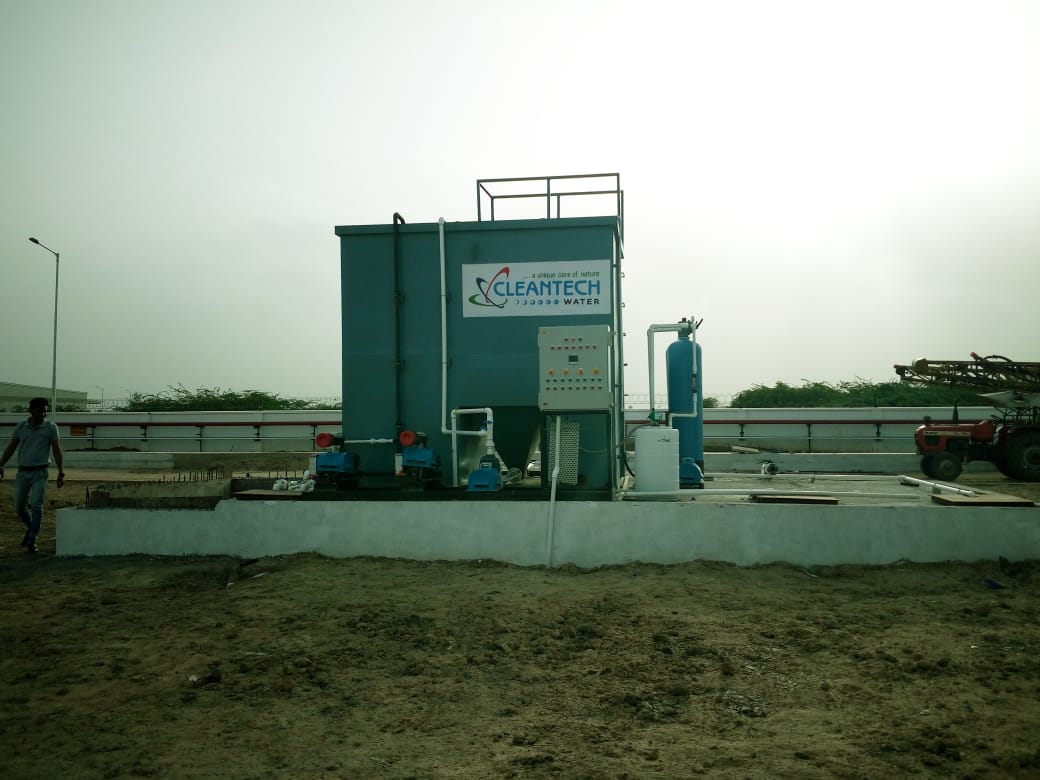 Cleantech Water is a leading sewage treatment plant manufacturer based in Ahmedabad, Gujarat, designing and installing CPCB-compliant STPs for housing societies, industries, hotels, hospitals, and commercial buildings across India since 2013. Our sewage water treatment plants are not one-size-fits-all products — every system is sized and configured for the client’s actual daily flow, site conditions, and effluent quality targets before a proposal is issued.
Types of Sewage Treatment Plants We Manufacture
We design and manufacture three primary sewage water treatment plant technologies, each suited to different project types, budgets, and space constraints. Understanding the differences before procurement saves both cost and time:
| Technology | How It Works | Capacity Range | Best Suited For |
|---|---|---|---|
| MBBR Moving Bed Biofilm Reactor |
Bacteria grow on floating plastic bio-carriers in an aerated tank. Biofilm handles load variation without operator intervention. | 10 KLD – 3,000 KLD | Housing societies, hotels, industries — best cost-performance balance for most Indian projects |
| SBR Sequencing Batch Reactor |
Time-controlled batch treatment in a single tank. Fill → react → settle → decant cycles handled by PLC automation. | 10 KLD – 500 KLD | High-rise buildings, hospitals, institutions — space-constrained sites needing automation and nitrogen removal |
| MBR Membrane Bioreactor |
Combines activated sludge with ultrafiltration membranes. Retains all biomass, producing near-potable treated water quality. | 5 KLD – 500 KLD | Luxury hotels, eco-resorts, pharma campuses — where treated water reuse for flushing or cooling towers is the goal |
*All three technologies produce CPCB-compliant effluent (BOD <30 mg/L, COD <250 mg/L, TSS <100 mg/L) when properly designed and operated. Technology selection should be based on available footprint, occupancy pattern, treated water reuse requirements, and 10-year operating cost — not just capital cost.
Packaged Sewage Treatment Plant vs Civil (RCC) STP — Which Is Right for You?
One of the most common procurement mistakes is comparing packaged STP quotes against civil STP quotes without accounting for the full installed cost. Here is what the difference actually means:
| Factor | Packaged STP (FRP/MS) | Civil STP (RCC) |
|---|---|---|
| Installation time | 2–4 weeks | 3–5 months |
| Civil construction cost | Included in unit price | ₹8,000–₹18,000/KLD extra |
| Factory testing | Yes — before dispatch | No — site-built only |
| CPCB approval | Easier (pre-certified unit) | Site-specific testing required |
| Relocatability | Yes | No — permanent structure |
| Best for | Under 500 KLD — residential, commercial, industrial | Above 500 KLD — municipal scale |
Sewage Treatment Plant Capacity Guide — What Size Do You Need?
Incorrect capacity sizing is the most expensive STP procurement mistake. An undersized plant fails CPCB discharge tests; an oversized plant inflates capital and monthly electricity costs permanently. Use the CPHEEO standard formula:
STP Sizing Formula (CPCB/BIS Standard):
Daily sewage (KLD) = Number of users × 135 litres per person per day ÷ 1,000
Add 20% buffer for peak days. Hotels use 180 LPCD; industrial canteens use 45 LPCD.
| Property Type | Size | Recommended STP Capacity | Approx. Cost |
|---|---|---|---|
| Small apartment / guesthouse | 20–50 flats / 30 rooms | 5–10 KLD | ₹3–₹10 lakh |
| Medium housing society | 100–150 flats | 20–25 KLD | ₹10–₹18 lakh |
| Large gated community | 300–500 flats | 50–80 KLD | ₹25–₹45 lakh |
| Business hotel (100–150 rooms) | 200–300 guests + staff | 40–60 KLD | ₹22–₹40 lakh |
| Hospital / institution | 100–200 beds | 30–50 KLD | ₹18–₹35 lakh |
| Industrial / township | 500+ people | 100–500 KLD | ₹40 lakh – ₹1.5 crore |
Industries and Sectors We Serve
Our sewage treatment plants are installed and operational across the following sectors. Each has different regulatory requirements, effluent characteristics, and treated water reuse options — and our design accounts for these from the first sizing conversation:
RERA & CPCB compliance for housing societies
Variable occupancy loads, kitchen effluent, grey water reuse
Bio-medical wastewater, pathogen removal, MoEFCC compliance
High-BOD effluent, FSSAI compliance, odour control
High COD/TDS effluent, colour removal, SPCB compliance
API effluent treatment, ZLD, CPCB/SPCB stringent norms
Compact packaged STPs for campuses and hostels
Developer-stage compliance, OC requirements, RERA norms
Oily wastewater, industrial sewage, cooling tower integration
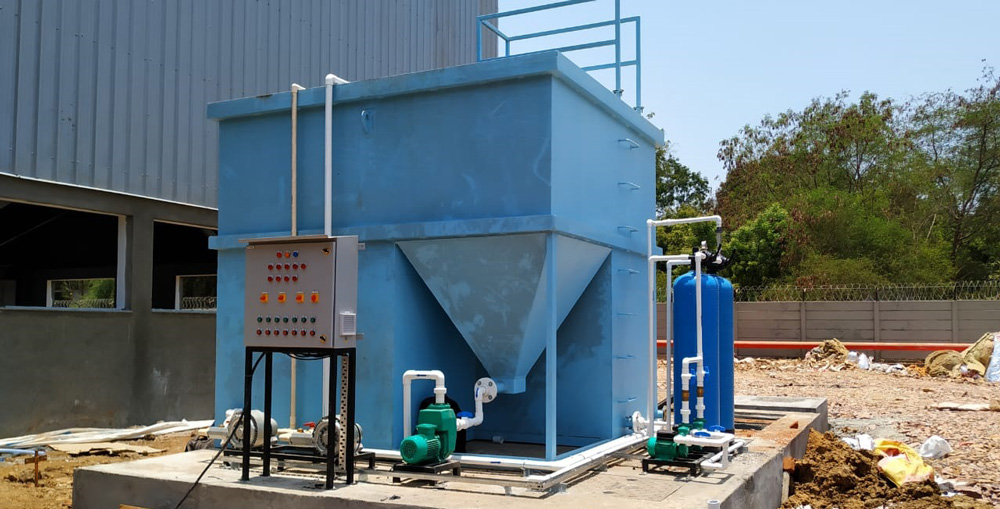
Sewage Water Treatment Plant — Cleantech Water | Industrial STP, India
Proven Track Record — Clients Who Trust Cleantech Water
Our sewage treatment plant installations are operational at some of India’s most demanding project environments — where CPCB compliance is non-negotiable and downtime carries reputational risk:
GIFT City
Multi-building commercial + residential STP, Gandhinagar
📍 Gandhinagar, Gujarat
Adani Group
Industrial wastewater treatment systems
📍 Ahmedabad, Gujarat
TATA
Packaged STP for residential township project
📍 Gujarat
Mother Dairy
Food processing effluent + sewage treatment
📍 Pan-India
L&T
Construction camp sewage treatment system
📍 Gujarat
Arvind Group
Textile effluent + STP, Ahmedabad facility
📍 Ahmedabad, Gujarat
Blue Star
Commercial building STP installation
📍 Gujarat
HP India
Corporate campus sewage treatment
📍 India
Fiat India
Automotive plant sewage treatment system
📍 Gujarat
150+
STP Installations
96%
Client Satisfaction
6
States Served
Since 2013
13+ Years Experience
Why Choose Cleantech Water for Your Sewage Treatment Plant?
There are dozens of STP suppliers in Gujarat and pan-India. Here is what specifically differentiates how we operate — not marketing copy, but things that show up in the project:
Site Assessment Before Sizing — Not After
We send an engineer for a free site visit to assess actual daily water consumption, peak load periods, available footprint, inlet/outlet points, and soil conditions before proposing a capacity. Most suppliers quote capacity based on a thumb-rule over the phone; we have found this leads to 20–40% over-sizing or under-sizing in a significant proportion of projects. Our proposals are site-specific from day one.
Factory-Tested Units — Not Site-Assembled Unknowns
Every packaged STP we manufacture is hydrostatically tested and operationally verified at our facility before dispatch. We have seen competitors deliver units that fail their first water trial on-site, delaying CPCB consent by months. Factory testing is a standard deliverable, not a premium option, in every Cleantech proposal.
Biological Seeding and Commissioning Support
A sewage treatment plant is not operational the moment it is connected to a power supply. Biological treatment requires seeding with activated sludge and a 2–4 week stabilisation period before the system meets CPCB discharge norms. We manage this phase — supplying seed sludge, monitoring DO levels, adjusting aeration, and documenting effluent quality — as part of every installation contract.
Operation & Maintenance Contracts Available
Post-installation, we offer Annual Maintenance Contracts (AMC) and Operation & Maintenance (O&M) contracts covering scheduled visits, chemical supply, sludge management, CPCB compliance reporting, and emergency response. This ensures your STP stays compliant and operational without placing the burden on your building management or engineering staff.
Grey Water Recycling Integration
For clients in water-scarce areas or with sustainability targets, we design grey water treatment systems that work alongside the main STP — recycling bathroom and laundry water for toilet flushing and landscape irrigation. This can reduce a property’s total freshwater consumption by 30–40% and significantly improves ROI on the overall water management investment.
Get a Free Site Assessment for Your Sewage Treatment Plant
150+ installations across India | Free capacity sizing | CPCB-compliant design | AMC available
Frequently Asked Questions — Sewage Treatment Plants
What is a sewage treatment plant and how does it work?
A sewage treatment plant treats domestic or industrial wastewater through a staged process: primary treatment (screening and settling to remove solids), secondary/biological treatment (aerobic bacteria consume dissolved organic matter — BOD and COD), and tertiary treatment (filtration, disinfection with UV or chlorine). The treated effluent meets CPCB discharge standards and can be discharged into water bodies or reused for irrigation, flushing, and cooling towers. In India, STPs are mandatory for all properties generating over 10 KLD of sewage under CPCB guidelines.
What are the different types of sewage treatment plants available in India?
The three main types of sewage treatment plants used in India are MBBR (Moving Bed Biofilm Reactor), SBR (Sequencing Batch Reactor), and MBR (Membrane Bioreactor). MBBR suits most residential and commercial projects; SBR is preferred for space-constrained automated systems; MBR produces the highest effluent quality for water reuse applications. Civil (RCC) and packaged (FRP/MS) configurations are available for all three technologies.
How do I choose the right sewage treatment plant technology for my project?
Technology selection depends on four factors: available footprint (MBBR and MBR are most compact), occupancy pattern (MBBR handles variable loads best), treated water reuse requirements (MBR if reuse for flushing or cooling towers is planned), and 10-year budget (MBBR has lowest total cost of ownership for most projects). For most Indian housing societies, hotels, and commercial buildings under 500 KLD, MBBR in a packaged FRP vessel is the most practical choice. Cleantech Water provides a free site assessment and technology recommendation before issuing any proposal.
Is a sewage treatment plant mandatory in India?
Yes. Under CPCB guidelines, all establishments — residential, commercial, or industrial — generating more than 10 KLD of sewage must install a certified sewage treatment plant. NGT orders since 2019 have made this non-negotiable for housing societies above 50 units. RERA-registered residential projects must submit STP drawings and compliance certificates as part of the Occupancy Certificate (OC) process. Non-compliance attracts fines of ₹10,000–₹1,00,000 from State Pollution Control Boards and can result in property sealing.
What is the cost of a sewage treatment plant in India?
Sewage treatment plant cost in India ranges from ₹3 lakh for a 5 KLD system (small apartment) to ₹1.5 crore+ for a 500 KLD industrial plant. For the most common project sizes: a 20–25 KLD STP for a 100-flat housing society costs ₹10–₹18 lakh; a 50 KLD STP for a large community costs ₹25–₹40 lakh. Monthly O&M runs ₹8,000–₹55,000 depending on capacity. For a detailed breakdown, see our residential STP cost guide.
Do you offer sewage treatment plants across India?
Yes. Cleantech Water designs, manufactures, installs, and services sewage treatment plants across Gujarat (Ahmedabad, Surat, Rajkot, Vadodara, Gandhinagar), Maharashtra, Rajasthan, Madhya Pradesh, Telangana, and Chhattisgarh. Our engineering team travels to client sites for free initial assessments and is available for post-installation support and AMC visits pan-India.
What is the difference between a sewage treatment plant and an effluent treatment plant?
A sewage treatment plant treats domestic wastewater — from toilets, bathrooms, kitchens — containing organic matter, pathogens, and nutrients. An effluent treatment plant (ETP) treats industrial process wastewater which may contain heavy metals, toxic chemicals, high-strength COD, colour, or specific contaminants unique to that industry. Many industrial facilities need both: an STP for their canteen and office sewage, and an ETP for their process effluent.
How long does it take to install a packaged sewage treatment plant?
A packaged MBBR sewage treatment plant (10–100 KLD) is typically installed in 2–4 weeks from delivery to site, assuming civil pit work is ready. The commissioning and biological seeding phase adds another 2–4 weeks before the plant achieves stable CPCB-compliant effluent quality. Civil (RCC) STPs take significantly longer — typically 3–5 months from groundbreaking. For projects with tight OC or PCB consent timelines, packaged systems are the only practical option.
Vipul Chavda — Co-Founder, Cleantech Water
Vipul has 13+ years of hands-on experience designing and commissioning sewage treatment plants for housing societies, hotels, hospitals, food processing units, and industrial facilities across Gujarat and 6 Indian states. Cleantech Water has delivered 150+ STP installations, including projects at GIFT City, Adani, TATA, Mother Dairy, L&T, and Arvind Group. Every Cleantech proposal begins with a free site assessment — not a standard product quote.