

The paper and pulp industry plays a pivotal role in the global economy, producing materials essential for everything from books and packaging to tissues and newspapers. However, this industry is also one of the largest water consumers and wastewater producers. The process of converting raw materials into paper products requires vast amounts of water, and this results in the generation of wastewater that can be highly contaminated with organic and inorganic pollutants. Thus, wastewater treatment in paper and pulp mills is not just a regulatory requirement but a vital step toward ensuring environmental sustainability.
In this blog post, we will explore the methods and technologies employed in wastewater treatment in paper and pulp mills, focusing on how these facilities manage their effluent to reduce their environmental impact. We will also discuss the importance of integrating a sewage treatment plant (STP) into the facility to ensure comprehensive water management and compliance with environmental regulations.
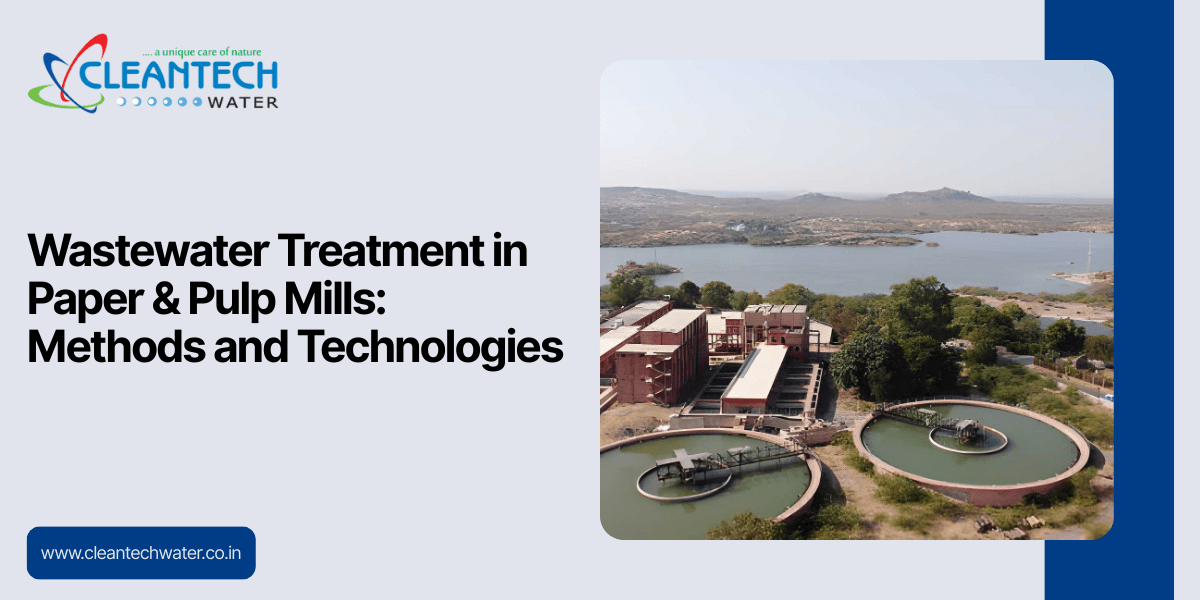
The Need for Wastewater Treatment in Paper & Pulp Mills
Wastewater produced in paper and pulp mills contains a variety of contaminants, including:
- Suspended Solids: These are particles that remain in the water after paper fibres are separated.
- Chemical Oxygen Demand (COD): The organic matter in wastewater that can consume oxygen in receiving water bodies.
- Biochemical Oxygen Demand (BOD): It refers to the amount of oxygen that microorganisms need to decompose organic matter present in water.
- Colouration: Many pulp and paper processes, such as bleaching, result in coloured effluent.
- Chlorine Compounds and Other Chemicals: Chemicals used in bleaching and pulping processes that can be harmful to aquatic life.
Without proper treatment, these pollutants can damage aquatic ecosystems, harm wildlife, and contaminate groundwater sources, leading to severe environmental consequences. Moreover, untreated wastewater can result in hefty fines and legal penalties for mills that fail to meet regulatory requirements.
Key Methods of Wastewater Treatment in Paper & Pulp Mills
There are several methods used in the treatment of wastewater in paper and pulp mills. These methods range from primary to tertiary treatments, with a focus on physical, chemical, and biological processes.
1. Primary Treatment
Primary treatment is the first step in wastewater treatment, aimed at removing large solids and debris from the effluent. In the case of paper and pulp mills, primary treatment is crucial because these facilities generate wastewater that contains a high level of suspended solids and fibres.
Methods used in primary treatment include:
- Screening: Large solids such as plastic, wood chips, and other debris are removed from the wastewater using mechanical screens. This is typically the first step to prevent clogging of equipment in subsequent treatment processes.
- Sedimentation: After screening, the wastewater undergoes sedimentation, where heavier particles, including fibres and suspended solids, settle at the bottom of a sedimentation tank. This process reduces the solid content of the water before it moves to the next stage.
- Flotation: In some cases, flotation is used to remove lighter particles that don’t settle well during sedimentation. Air is injected into the wastewater, causing the solids to float to the surface, where they can be skimmed off.
Primary treatment is generally effective for removing large particles but does little to reduce dissolved pollutants such as organic material or chemicals. Hence, it is followed by secondary treatment.
2. Secondary Treatment
Secondary treatment is designed to remove the dissolved organic matter that remains after primary treatment. This step typically involves biological processes that use bacteria or other microorganisms to break down organic pollutants in the water.
Key secondary treatment methods include:
- Activated Sludge Process (ASP): This is one of the most common biological treatment methods. It involves aerating the wastewater in large tanks, encouraging the growth of bacteria that consume the organic material. The bacteria form flocs, which are then removed by sedimentation. The remaining treated water is typically filtered before being discharged or reused.
- Trickling Filters: In this method, wastewater is passed over a bed of rocks or other media on which microorganisms grow. The bacteria in the filter break down organic materials as the water flows over them. Trickling filters are often used as a secondary treatment option in paper mills, where they help reduce BOD and COD levels.
- Sequencing Batch Reactors (SBR): These reactors are ideal for facilities with fluctuating flow rates. The SBR process involves filling a reactor with wastewater, adding oxygen to support biological degradation, and then allowing the system to settle. The cycle is repeated to ensure the treatment of all the wastewater.
Secondary treatment methods significantly improve the quality of the effluent by reducing the organic load. However, they do not typically address chemical contaminants or the removal of colour. Therefore, tertiary treatment is often required.
3. Tertiary Treatment
Tertiary treatment is the final step in wastewater treatment, aimed at polishing the effluent to meet the highest water quality standards. It is particularly important in paper and pulp mills due to the presence of toxic chemicals and colour in the wastewater.
Standard tertiary treatment technologies include:
- Chemical Precipitation: This involves adding chemicals such as alum or lime to the wastewater to form solid particles that bind with dissolved contaminants. These particles can later be separated from the water through settling or filtration processes. This method is often used to remove phosphates, heavy metals, and other pollutants from the water.
- Activated Carbon Filtration: Activated carbon is highly effective at removing organic compounds, including colour-causing substances. This process is beneficial in the paper industry, where bleaching agents can result in coloured effluent. The activated carbon adsorbs contaminants, leaving the water clear and free from harmful chemicals.
- Ultraviolet (UV) Disinfection: UV treatment involves exposing the effluent to UV light to kill harmful bacteria and microorganisms. While it does not remove chemical pollutants, UV disinfection is crucial for ensuring that the water is safe for reuse or discharge.
- Reverse Osmosis (RO): Reverse osmosis is a membrane filtration process that removes dissolved salts, heavy metals, and other contaminants from wastewater. It is often used in facilities aiming to achieve zero-liquid discharge (ZLD), where all wastewater is treated, recovered, and reused.
Talk to a Wastewater Expert!
Integration of Sewage Treatment Plants (STP) in Paper & Pulp Mills
In addition to dedicated wastewater treatment processes, paper and pulp mills can benefit from integrating a sewage treatment plant (STP) into their wastewater management systems. While STPs are typically designed for treating domestic sewage, they can be adapted to handle industrial effluent, including wastewater from paper mills.
How an STP helps in paper mill wastewater treatment:
- Reduced Load on Industrial Treatment Systems: An STP can handle the organic load from domestic waste within the mill, allowing the industrial treatment systems to focus on removing more complex industrial contaminants. This reduces the overall load on the mill’s primary and secondary treatment systems, improving their efficiency.
- Water Recycling and Reuse: STPs can facilitate water recycling by treating effluent to a high standard and enabling its reuse for non-potable applications, such as cooling, irrigation, or even as process water in the paper-making process. This reduces the mill’s reliance on external water sources and supports sustainability efforts.
- Energy Generation: Many modern STPs incorporate anaerobic digesters that convert organic waste into biogas, which can be used to generate electricity or heat. This adds a layer of sustainability, reducing energy costs for the mill.
- Compliance with Regulatory Standards: In regions where stricter regulations govern water quality, integrating an STP ensures that the paper mill complies with both industrial and municipal wastewater standards. This helps mills avoid penalties and maintain good relationships with regulatory bodies.
Technological Innovations in Wastewater Treatment for Paper Mills
As the pressure to minimise environmental impact increases, several innovative technologies are emerging to help paper and pulp mills improve wastewater treatment processes:
- Zero-Liquid Discharge (ZLD): ZLD is a treatment process that recycles and reuses almost all of the wastewater produced by the mill, leaving no discharge to the environment. ZLD systems often combine several treatment technologies, including RO, evaporation, and crystallisation, to recover valuable water and reduce the environmental footprint.
- Electrocoagulation: This technique uses an electric current to induce coagulation, helping to remove suspended solids, oils, and heavy metals from wastewater. It is gaining popularity in paper mills due to its efficiency and ability to treat complex wastewater streams.
- Membrane Bioreactors (MBR): MBRs combine biological treatment with membrane filtration, providing a compact and efficient system for treating wastewater. They are particularly effective at handling high volumes of wastewater and producing high-quality effluent.
Challenges and Future Directions
While wastewater treatment technologies in paper and pulp mills have advanced significantly, there are still several challenges to address:
- High Treatment Costs: Advanced treatment methods like reverse osmosis and membrane bioreactors can be expensive to implement and operate. Mills need to balance the cost of treatment with the potential savings from water reuse and reduced environmental penalties.
- Wastewater Reuse: Achieving actual zero-liquid discharge remains challenging for many mills, especially those with high contamination levels in their wastewater. There is a need for more affordable and efficient technologies for complete wastewater reuse.
- Regulatory Compliance: As environmental regulations become stricter, mills will need to invest in more advanced treatment technologies to meet discharge limits for pollutants like BOD, COD, and colour.
- Energy Consumption: Many wastewater treatment processes require significant energy input, which can contribute to a mill’s overall carbon footprint. The integration of renewable energy sources or energy recovery systems, such as biogas production, could help mitigate this issue.
Conclusion
Wastewater treatment in paper and pulp mills is a critical aspect of reducing environmental impact and ensuring sustainability in an industry that relies heavily on water. From primary and secondary treatment methods like sedimentation and activated sludge to advanced technologies such as reverse osmosis and membrane bioreactors, there is a wide variety of solutions available to meet the unique challenges faced by this sector.
Integrating a sewage treatment plant into the wastewater management strategy can provide additional benefits, including water recycling, energy generation, and regulatory compliance. As the industry continues to evolve, further technological innovations and a focus on sustainability will drive the development of more efficient and cost-effective wastewater treatment systems.
By adopting these practices, paper mills can not only improve their environmental performance but also create significant cost savings, paving the way for a cleaner, more sustainable future in the pulp and paper industry.
Frequently Asked Questions
1. What are the environmental impacts of untreated wastewater from paper mills?
Untreated wastewater from paper mills can pollute rivers, degrade ecosystems, and harm aquatic life. It contains harmful chemicals, high BOD/COD levels, and suspended solids, leading to long-term environmental damage and legal consequences if not adequately treated.
2. How does reverse osmosis help in wastewater treatment for paper mills?
Reverse osmosis (RO) removes dissolved salts, heavy metals, and organic pollutants, providing high-quality treated water. It is crucial for paper mills aiming to recycle wastewater for reuse in production processes or to meet zero-liquid discharge (ZLD) goals.
3. What are the key differences between activated sludge and trickling filters in wastewater treatment?
Activated sludge uses aeration tanks to promote bacterial breakdown of organic matter, while trickling filters pass water over media surfaces with biofilms to treat effluent. Both methods reduce BOD, but activated sludge is typically more efficient for larger volumes of wastewater.
4. Why is colour removal essential in paper mill wastewater treatment?
Colour removal is critical because chemical compounds from bleaching processes can cause discolouration in receiving water bodies. Tertiary treatment methods like activated carbon filtration effectively remove colour, ensuring compliance with environmental regulations and reducing visual pollution.
5. What is Zero-Liquid Discharge (ZLD) in paper mills?
Zero-Liquid Discharge (ZLD) is a wastewater management strategy that recycles and reuses almost all of the wastewater generated, leaving no discharge into the environment. It is an eco-friendly solution for paper mills to minimise their water footprint and comply with stringent environmental standards.
6. Can sewage treatment plants (STPs) be integrated into paper mill wastewater systems?
Yes, integrating a sewage treatment plant (STP) into paper mill operations helps manage domestic wastewater. This reduces the overall load on industrial treatment systems and supports water reuse initiatives, enhancing sustainability and ensuring compliance with environmental regulations.
Take the Next Step Towards Sustainable Water Management Today!
Is your paper mill ready to embrace sustainable wastewater treatment solutions? Don’t wait for regulatory fines or environmental concerns to catch up with you. Start improving your wastewater management system now and make a positive impact on both your bottom line and the environment.
At Cleantech Water, we specialise in providing cutting-edge wastewater treatment technologies tailored to the unique needs of paper and pulp mills. Whether you’re looking to implement primary, secondary, or tertiary treatment solutions, we offer systems that ensure compliance with environmental regulations while reducing water consumption and operational costs.
From advanced filtration systems and chemical precipitation to zero-liquid discharge (ZLD) solutions, we have the expertise and technology to help you achieve efficient, sustainable water management. Our team will work closely with you to design a custom wastewater treatment plan that meets your specific needs.
Ready to take control of your wastewater management and make a lasting difference? Get in touch with us at +91-9099915539 or +91-9558996411, or write to info@cleantechwater.co.in to schedule a free consultation. Discover how our solutions can help your paper mill stay compliant, reduce costs, and contribute to a cleaner, greener future.