

Wastewater might seem like a byproduct of modern life, but in reality, it’s a valuable resource—if handled the right way. Behind every flush, every load of laundry, and every factory drain lies a journey: one that leads to a wastewater treatment plant (WWTP), where polluted water is transformed into something reusable or safe to return to nature.
As water scarcity intensifies and sustainability takes center stage, understanding how wastewater treatment plants work—and why they matter—is more crucial than ever.
In this blog, we’ll explore the structure, purpose, process, types, and future of wastewater treatment in detail.
What Exactly Is Wastewater?
Wastewater is any water that has been used and is no longer clean or safe for immediate reuse. It can come from:
- Homes (bathroom, kitchen, laundry water)
- Industries (chemical discharge, rinse water)
- Businesses (restaurants, laundromats, offices)
- Rainfall runoff (stormwater carrying pollutants from streets)
Each type of wastewater contains contaminants—organic waste, pathogens, chemicals, heavy metals, oil, grease, or even microplastics—that must be removed before the water can be safely reused or discharged.
Why Do We Need Wastewater Treatment Plants?
Left untreated, wastewater can wreak havoc on:
- Public health (by spreading disease)
- Aquatic ecosystems (by reducing oxygen levels and killing marine life)
- Soil quality (by contaminating farmland and groundwater)
- Urban infrastructure (by clogging drains and causing flooding)
Wastewater treatment plants serve as the last line of defense between our waste and the natural world. They ensure that discharged water meets environmental standards and can be reused safely in industries, agriculture, and sometimes even households.
Types of Wastewater Treatment Plants
1. Sewage Treatment Plants (STPs)
Sewage treatment plants are specifically designed to process and purify wastewater generated from domestic sources—think bathrooms, kitchens, and laundry areas. These systems are commonly installed in residential complexes, hotels, hospitals, office parks, and institutional buildings, where large volumes of human waste, organic matter, and greywater are generated daily. The primary goal of an STP is to remove solid waste, reduce organic load, and eliminate harmful pathogens to make the water safe for disposal or reuse.
What makes STPs particularly valuable is their ability to promote water conservation through reuse. Treated sewage water can be redirected for gardening, landscaping, toilet flushing, or even cooling systems in commercial facilities—helping reduce dependence on freshwater sources. In urban areas where groundwater is depleting and municipal sewer connections are overloaded, STPs provide an on-site, eco-friendly alternative that supports sustainability and regulatory compliance.
2. Effluent Treatment Plants (ETPs)
Effluent treatment plants serve a different and often more challenging purpose—they’re built to treat industrial wastewater. Unlike domestic sewage, industrial effluents are loaded with complex contaminants such as oils, chemicals, heavy metals, dyes, and toxic residues. These pollutants can vary dramatically depending on the industry. What’s released from a textile dyeing unit will look very different from the effluent of a pharmaceutical manufacturer. This is why ETPs are custom-designed, combining chemical, biological, and advanced filtration processes tailored to the factory’s specific discharge profile.
For industrial setups, this type of wastewater treatment plant isn’t just a regulatory requirement—it’s a vital environmental safeguard. A properly functioning ETP ensures that harmful substances don’t seep into the soil, pollute nearby water bodies, or affect public health. It also opens the door to water reuse within the plant itself, especially in Zero Liquid Discharge (ZLD) setups, where no wastewater leaves the facility. As environmental norms become stricter, industries that invest in efficient ETPs not only avoid penalties but also demonstrate long-term responsibility and resilience.
3. Common Effluent Treatment Plants (CETPs)
CETPs are a shared solution designed for industrial estates or clusters where it may not be feasible for every unit to build and maintain its own treatment system. In places like textile hubs, leather tanning districts, or chemical parks—especially those filled with small and medium enterprises (SMEs)—CETPs offer a centralized facility that receives pre-treated effluent from various sources and subjects it to a common treatment process. These plants are usually funded and operated through industrial associations, local authorities, or public-private partnerships.
The beauty of a CETP lies in its scalability and collaborative model. Instead of burdening each factory with its own treatment infrastructure, it ensures a uniform standard of treatment across an entire industrial zone. This not only reduces the cost and complexity for individual units but also makes regulatory monitoring more effective. CETPs are crucial for promoting collective environmental responsibility, particularly in developing regions where industrial growth needs to balance sustainability with affordability.
4. Decentralized or Packaged Treatment Plants
Decentralized wastewater treatment systems, often referred to as packaged plants, offer a compact, modular solution for treating wastewater at or near its source. These systems are ideal for places that are off-grid, temporary, or spatially constrained—such as resorts in remote locations, construction camps, rural schools, or townships not yet connected to municipal sewage lines. Since they come pre-engineered and ready to install, they’re perfect for fast deployment with minimal civil work.
Though small in size, these plants pack powerful treatment capabilities using advanced technologies like MBBR, SBR, or membrane-based systems. They’re designed to be energy-efficient, easy to maintain, and even solar-compatible. What makes them especially attractive is their ability to enable onsite reuse of treated water—for landscaping, toilet flushing, or dust suppression—without the need for expensive pipelines or municipal connections. In the era of smart cities and decentralized infrastructure, these packaged units are making modern sanitation both practical and portable.
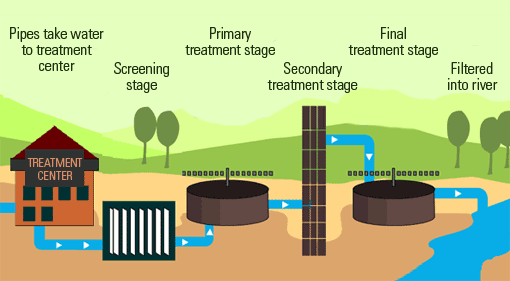
Stages of Wastewater Treatment (Excluding Drinking Water Treatment Steps)
Unlike water purification for human consumption, wastewater treatment emphasizes the removal of solids, organic matter, harmful microorganisms, and toxins from water that has already been used.
Here’s how that typically unfolds:
1. Preliminary Treatment: Protecting the System
Before the real cleanup begins, the water undergoes basic screening.
- Bar Screens: Remove large solids like rags, plastic, and wood.
- Grit Chambers: Allow sand, gravel, and heavy particles to settle.
- Flow Equalization: Balances water inflow, especially in monsoon or peak hours.
2. Primary Treatment: Separating Solids
The partially filtered water is then held in large settling tanks.
- Solids settle at the bottom (primary sludge).
- Oil, grease, and lighter substances float on top and are skimmed off.
- This step removes about 60% of suspended solids.
3. Secondary Treatment: Breaking Down Organic Waste
Now the biological magic happens. Microorganisms are introduced to consume dissolved organic matter.
Popular Methods Include:
- Activated Sludge Process (ASP): Oxygen is pumped into tanks, boosting microbial activity.
- Trickling Filters: Water trickles over media colonized by biofilms that digest pollutants.
- Moving Bed Biofilm Reactors (MBBR): Uses suspended plastic carriers to grow bacteria.
- Sequencing Batch Reactors (SBR): Treat water in timed batches using aeration and sedimentation in a single tank.
After this step, over 85–90% of pollutants are removed.
4. Tertiary Treatment: Advanced Polishing
For wastewater that will be reused or released into sensitive environments, tertiary treatment provides the finishing touches.
Techniques include:
- Membrane Filtration (ultrafiltration, nanofiltration, or reverse osmosis)
- Disinfection by UV light or ozone
- Nutrient Removal (targeting nitrogen and phosphorus)
This step ensures the water is crystal-clear, odorless, and pathogen-free—ready for reuse or safe discharge.
5. Sludge Treatment and Disposal
What happens to the solids removed in all the above stages?
- Thickening & Digestion: Reduces volume and eliminates pathogens.
- Dewatering: Uses centrifuges or filter presses to extract water.
- Disposal: Sludge can be composted, landfilled, incinerated, or used as biofuel or fertilizer.
Where Does the Treated Wastewater Go?
Once cleaned, wastewater becomes a resource, not a liability.
Reuse Possibilities:
- Agriculture: Irrigating crops or landscaping
- Industry: Cooling systems or processing
- Urban Use: Road cleaning, toilet flushing, or gardening
- Recharging aquifers through groundwater injection
In advanced cities, some wastewater is even purified to drinking-water levels and returned to the supply grid.
How Are Modern WWTPs Becoming More Sustainable?
1. Energy Efficiency
Today’s wastewater treatment plants are designed to consume less energy while delivering better performance. Smart aeration systems adjust oxygen levels based on real-time demand, cutting down on electricity usage. Many plants also generate biogas through anaerobic digestion of sludge, which can be used to power equipment on-site. This shift reduces both operating costs and the plant’s carbon footprint.
2. Resource Recovery
Modern wastewater treatment plants are no longer just about waste removal—they’re about resource recovery. Nutrients like nitrogen and phosphorus are extracted from treated water and turned into eco-friendly fertilizers. Even the leftover sludge, or biosolids, can be reused in agriculture or converted into energy. This circular approach supports both sustainability and revenue generation.
3. Smart Automation
Digital tools like IoT sensors and AI algorithms are transforming plant operations. These systems continuously monitor water quality, flow, and chemical levels, sending real-time alerts if anything goes off balance. This not only improves efficiency but also helps prevent breakdowns and regulatory violations. Automation is making plants smarter, safer, and more responsive.
4. Nature-Based Systems
In many areas, wastewater treatment plants are incorporating natural treatment methods that are both low-cost and eco-friendly. Constructed wetlands and bioswales use plants, soil, and microbes to filter and purify water. These systems require minimal energy and blend well with the environment. They’re especially useful in small towns or remote locations aiming for sustainable development.
Common Challenges in Wastewater Treatment
Despite the technology, some challenges remain:
- High setup and operational costs
- Inconsistent maintenance, especially in decentralized systems
- Industrial non-compliance with effluent standards
- Public unawareness about the value of treated wastewater
Solving these requires a combination of policy enforcement, education, innovation, and private-public partnerships.
How India Is Scaling Up Its Wastewater Treatment Game
India produces over 72,000 million liters of sewage per day, yet only about 30% is treated effectively. The rest often flows untreated into rivers and the environment. To address this, India is undergoing a major transformation in how it manages wastewater—through policy shifts, infrastructure upgrades, and tech innovation.
The Namami Gange Mission has led large-scale STP installations across the Ganga basin, aiming to intercept untreated sewage before it enters the river. This mission has become a national model for integrating river conservation with wastewater management.
Meanwhile, the Smart Cities Mission promotes decentralized wastewater systems—compact, on-site treatment solutions suited for buildings, communities, and public spaces. These systems support water reuse and reduce pressure on central sewage lines.
The CPCB now mandates that all new buildings have in-house wastewater treatment plants and that polluting industries adopt Zero Liquid Discharge (ZLD). This ensures no untreated wastewater leaves the premises.
On top of that, the private sector is stepping in with ready-to-deploy STPs, containerized treatment units, and even sludge-to-energy systems. This is bringing faster, scalable solutions to towns, industries, and infrastructure projects across the country.
India’s wastewater story is yet to be perfect. But the momentum is strong, and the shift toward reuse, decentralization, and compliance is well underway.
FAQs
Q1. Can wastewater treatment plants work off-grid?
Yes! With solar panels, biogas recovery, and low-energy systems, many small wastewater treatment plants can run independently.
Q2. What is “zero liquid discharge” (ZLD)?
ZLD means absolutely no wastewater is discharged into the environment. All water is recovered and reused.
Q3. Is recycled wastewater safe for humans?
Yes—if properly treated. Recycled water is commonly used for non-potable uses, but with advanced filtration and disinfection, it can even meet potable standards.
Q4. Can households treat their own wastewater?
Absolutely. Compact STPs and reed-bed systems allow homes, resorts, and apartments to treat greywater on-site.
Q5. How does a wastewater treatment plant handle seasonal variations in flow?
By using flow equalization tanks and flexible biological systems that can adjust aeration and retention times.
Q6: What is a wastewater treatment plant and how does it work?
A wastewater treatment plant is a facility that removes contaminants from sewage or industrial effluent. It works through multiple stages including preliminary screening, biological treatment, and advanced filtration to clean water before reuse or safe discharge into the environment.
Q7: Why is wastewater treatment important in India?
Wastewater treatment is crucial in India to prevent water pollution, protect public health, and conserve freshwater resources. With increasing urbanization and industrial growth, effective treatment helps meet environmental regulations and supports sustainable water management.
Q8: What are the main types of wastewater treatment plants?
Wastewater treatment facilities can be categorized into several types: Sewage Treatment Plants (STPs) that handle domestic wastewater, Effluent Treatment Plants (ETPs) designed for industrial waste, Common Effluent Treatment Plants (CETPs) that serve groups of industries, and compact or decentralized systems suited for smaller or remote locations.
Make Every Drop Count with Smarter Wastewater Treatment
Wastewater isn’t waste—it’s opportunity in disguise.
Whether you’re a municipality, factory owner, builder, or an eco-conscious institution, investing in wastewater treatment is investing in a cleaner, smarter, and more sustainable future.
Looking for reliable, efficient, and regulation-compliant wastewater treatment solutions in India?
Let’s build your ideal STP or ETP—customized for your needs.
- Turnkey Installation
- Low Energy Consumption
- Expert Support & Maintenance
- 100% Compliance with CPCB Norms
Call us at +91-9558996411 or write to us at info@cleantechwater.co.in to get in touch for a FREE consultation and system design. Together, let’s make wastewater work for you.