

Industrial wastewater treatment is a critical process that not only safeguards the environment but also helps industries comply with India’s growing environmental regulations. As industries in India evolve, the demand for sustainable and compliant wastewater treatment plants increases, particularly in industrial settings where wastewater quality must meet stringent standards. However, navigating through the complexities of government subsidies and approvals for wastewater treatment projects can often feel overwhelming.
This comprehensive guide will provide you with a step-by-step approach to securing government approvals and subsidies for industrial wastewater treatment plants in India. By focusing on regulatory compliance, financial support schemes, and the best practices for plant installation and operation, this blog will arm you with the knowledge needed to execute a successful project in line with Indian laws and industry standards.
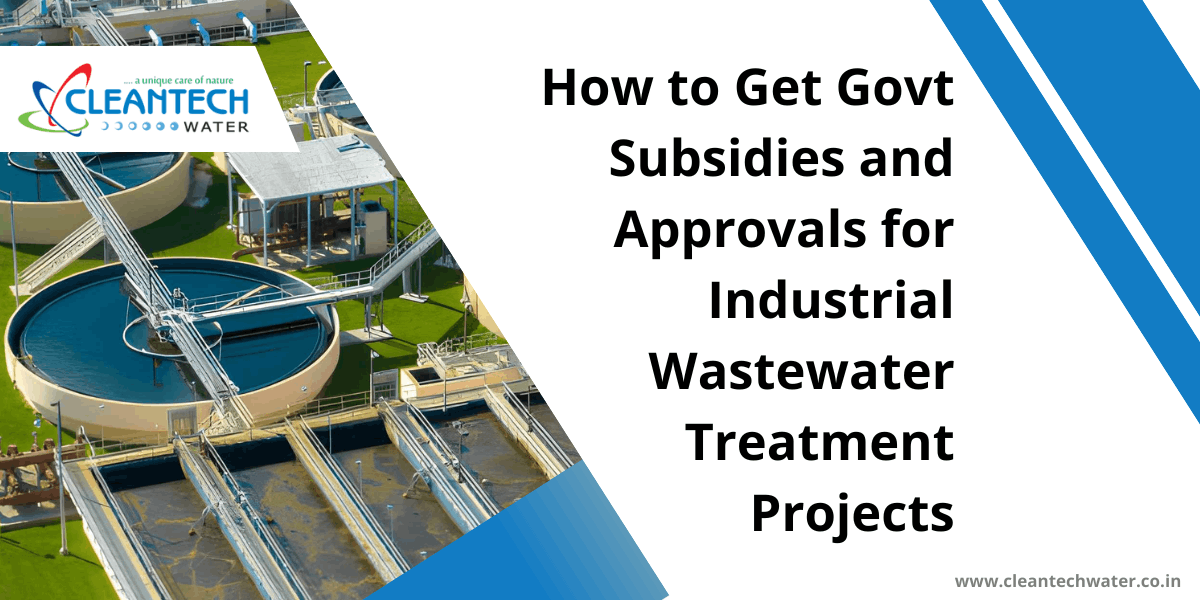
Why Approvals and Subsidies Matter
The role of government approvals and subsidies in industrial wastewater treatment projects is more significant than ever in India. Environmental regulations are becoming stricter with each passing year, and industries must ensure that their wastewater treatment systems are designed to meet compliance standards. These regulations come from authorities like the Central Pollution Control Board (CPCB) and State Pollution Control Boards (SPCBs), which set guidelines for sewage water treatment, effluent quality standards, and plant design parameters.
Beyond compliance, government subsidies offer industries an opportunity to offset the high capital and operational costs involved in setting up wastewater treatment plants. As industries continue to focus on sustainability, understanding how to access these subsidies and approvals is critical for long-term financial health. Whether you’re dealing with sewage treatment plants (STPs) or industrial effluent treatment plants (ETPs), adhering to the right process ensures not only legal operation but also optimal resource usage and the ability to unlock financial incentives.
Key Government Approvals for Industrial Wastewater Treatment Projects
Before embarking on any industrial wastewater treatment plant project, understanding the necessary government approvals is a fundamental first step. Depending on the nature of your business, the scale of the wastewater treatment plant, and the type of industry you belong to, these approvals can differ in complexity. However, several core approvals are common across most industrial projects:
1. Pollution Consent Approvals
The Indian government requires all industries to obtain pollution consent approvals from the relevant state authority before and after setting up a wastewater treatment plant. These are divided into two key types:
- Consent to Establish (CTE): This is the first approval you need before installing any sewage treatment plants or effluent treatment plants. The CTE ensures that your wastewater treatment plant design complies with environmental standards set by the CPCB and SPCB. For approval, industries need to submit detailed plans outlining their water treatment processes, technology used, and effluent characteristics.
- Consent to Operate (CTO): After the water treatment plant is installed and operational, industries must apply for the CTO to start discharging treated water. The CTO is typically issued for 1 to 5 years, depending on the industry category (red, orange, or green) and the scale of the project. It is essential to maintain strict adherence to discharge limits outlined in the consent. Regular inspections and reports are required to ensure compliance.
Both CTE and CTO approvals are granted under the Water (Prevention and Control of Pollution) Act, 1974 and the Air (Prevention and Control of Pollution) Act, 1981, which govern pollution control measures in India.
2. Environmental Clearances
For large industrial wastewater treatment plants, especially those situated near sensitive ecosystems or large urban areas, an Environmental Impact Assessment (EIA) may be necessary. This comprehensive study evaluates the environmental risks of constructing and operating a wastewater treatment plant, including effects on local water bodies, soil, and air quality. Depending on the findings, mitigation measures might need to be integrated into the design of the plant.
Once the respective environmental authority approves the EIA, you will have the green signal to proceed with the plant’s construction and operation.
3. Other Statutory Permissions
Apart from the CTE and CTO, industrial plants may require several additional permissions:
- Local Authority Approvals: Industries must obtain clearances from local authorities related to land use, zoning laws, utility connections, and water usage.
- Hazardous Waste Permits: Certain industries, like chemical or textile manufacturing, may deal with hazardous waste. In these cases, special authorisations for waste disposal and treatment must be acquired.
Ensuring that all these approvals are in place from the start of the project helps avoid future delays, fines, or shutdowns.
Step-by-Step Approval Process for Wastewater Treatment Plants
The approval process for industrial wastewater treatment plants involves multiple steps, and each one requires careful planning and execution. Let’s break down the process into simple, easy-to-follow steps:
Step 1: Prepare Required Documentation
The first step in securing CTE and CTO approvals is to prepare a comprehensive set of documents. These include:
- Detailed Project Report (DPR): This document outlines the technical details of the wastewater treatment plant, including capacity, technology, effluent characteristics, flow diagrams, and treatment processes.
- Pollution Control Plan: A detailed plan showing how the plant will treat wastewater to meet CPCB’s discharge standards. The plan should cover the treatment technologies used (e.g., membrane bioreactors (MBR), sequencing batch reactors (SBR), etc.).
- Environmental Impact Assessment (EIA): Required for large projects, this document assesses the potential environmental impact of your plant and offers mitigation measures.
Step 2: Submit CTE Application
Once the documentation is ready, submit the CTE application to the respective SPCB. The application should be accompanied by the required documents, such as site plans, plant layout, technology specifications, and water balance calculations. The SPCB will review the application and verify whether the proposed plant meets the necessary environmental standards. In some states, industries can file this application online via state pollution control portals.
Step 3: Install the Treatment Plant
After obtaining CTE, industries can proceed with installing the wastewater treatment plant. During this phase, it is essential to work closely with water treatment plant manufacturers who can provide expertise in the installation process. A reliable manufacturer will ensure that the plant design is aligned with compliance standards, that the necessary equipment is installed correctly, and that the plant operates efficiently from day one.
Step 4: Apply for CTO
Once the plant is installed and operational, the next step is to apply for the Consent to Operate (CTO). The CTO application requires submission of compliance reports and effluent discharge quality testing results. It’s essential to conduct initial testing before submitting the CTO application to demonstrate that the plant is functioning within the permissible discharge limits.
Step 5: Renewal and Compliance Monitoring
The CTO is typically valid for 1-5 years, depending on the industry’s category. Renewal applications must be submitted before the expiration of the current CTO. Compliance monitoring is an ongoing process, and industries must ensure that their plant continuously meets discharge limits and other operational standards as mandated by SPCB and CPCB.
Industrial Subsidies and Financial Support Schemes
The government of India offers a range of subsidies to encourage industries to adopt wastewater treatment plants and implement sustainable practices. These financial incentives are designed to make it easier for industries, especially SMEs, to invest in the infrastructure needed for sewage treatment plants and other effluent management systems.
Central and State Government Incentives
- Interest Subsidies: One of the major financial aids is the interest subsidy offered to industries on loans taken for the installation of water treatment plants. Subsidies typically cover up to 2% of the loan interest, making it financially easier for industries to invest in wastewater treatment.
- Capital Subsidies: Some states offer capital subsidies that cover a significant portion of the investment required to build sewage treatment plants and effluent treatment plants. These schemes are generally targeted at small and medium enterprises (SMEs) that may find it challenging to bear the high upfront costs of plant installation.
Mission-Based and Urban Development Schemes
- AMRUT 2.0 and Jal Hi Amrit Initiatives: These schemes are focused on improving water supply and wastewater management across India. Industries that adopt advanced sewage treatment plants or collaborate with local municipalities can avail themselves of these performance-linked grants.
- National Mission for Clean Ganga (NMCG): Industries situated along the Ganga Basin and involved in wastewater treatment can avail financial support from this scheme, which focuses on cleaning and rejuvenating the river. This mission funds projects designed to treat industrial effluent and promote water reuse.
Incentives for Reuse and Recycling
The government is encouraging industries to adopt Zero Liquid Discharge (ZLD) technologies, which allow treated water to be recycled and reused for non-process purposes. Industries implementing ZLD systems can access subsidies and financial assistance under various government schemes, which help reduce both operational costs and water usage.
What Industrial Buyers Must Watch Out For
When planning to set up a wastewater treatment plant, industrial buyers must be mindful of several critical aspects:
Category Classification
The pollution category of your industry, classified as Red, Orange, or Green by the CPCB, determines the regulatory requirements and cost of compliance. For example, Red industries like chemical manufacturing face stricter compliance protocols and more frequent inspections, resulting in higher operating costs. On the other hand, Green industries, such as textiles or paper manufacturing, typically have lower regulatory hurdles.
Technology Standards
Different wastewater treatment technologies like membrane bioreactors (MBR), SBR, and MBBR are ideal for specific types of effluent. It’s essential to work with the right water treatment plant manufacturers who offer solutions that align with your industry’s needs, ensuring that the treatment plant complies with CPCB standards.
Penalties for Non-Compliance
Failure to obtain the necessary CTE and CTO approvals or not adhering to the discharge limits can result in heavy penalties or the shutdown of operations. Compliance is not just about avoiding penalties; it’s about ensuring that your business can operate sustainably and meet the environmental expectations of your stakeholders.
Practical Checklist for Industrial Projects
To make the process of setting up a wastewater treatment plant as smooth as possible, here’s a quick checklist for industrial project managers:
- Identify Required Permits: Make sure to secure both CTE and CTO for your project.
- Prepare Documentation: Gather your DPR, pollution control plans, and EIA (if applicable).
- Submit CTE Application: Follow the SPCB guidelines for submitting your application with the necessary documents.
- Install the Plant: Work with reliable water treatment plant manufacturers to ensure timely and compliant installation.
- Apply for CTO: Submit the necessary compliance reports and undergo inspections after the plant is operational.
- Monitor Compliance: Stay updated on regulatory changes and renew CTO on time.
Conclusion
Successfully securing government approvals and subsidies for industrial wastewater treatment plants in India is a multi-step process that requires attention to detail, a clear understanding of regulatory frameworks, and strategic planning. By following the outlined steps and working closely with reputable water treatment plant manufacturers, industries can not only comply with regulations but also make their operations more efficient and sustainable. Moreover, government incentives play a crucial role in easing the financial burden, making it possible for businesses to invest in sewage treatment plants and industrial effluent treatment systems.
By committing to high standards of environmental compliance and resource conservation, industries in India can play a significant role in shaping a sustainable future.
Frequently Asked Questions
1. What is the process to obtain a Consent to Establish (CTE) for wastewater treatment plants in India?
To obtain a Consent to Establish (CTE) in India, industries must submit a detailed Project Report (DPR) that includes the proposed plant design, technology, water balance, and effluent characteristics. The application, along with necessary documents, must be submitted to the respective State Pollution Control Board (SPCB). The board evaluates the proposed treatment process for compliance with environmental standards before granting approval to begin construction.
2. What types of financial subsidies are available for industrial wastewater treatment plants in India?
Industries in India can benefit from interest subsidies, which cover up to 2% of the interest on loans for wastewater treatment infrastructure. Additionally, capital subsidies are provided to small and medium enterprises (SMEs) to offset installation costs. State and central government schemes, such as those under the AMRUT 2.0 program, also offer grants for projects that meet specific environmental and water conservation goals.
3. How does Zero Liquid Discharge (ZLD) benefit industrial wastewater treatment plants?
Zero Liquid Discharge (ZLD) is a wastewater treatment process that ensures 100% reuse of treated water, eliminating wastewater discharge. This system reduces the environmental impact of effluent discharge while allowing industries to conserve water. ZLD systems are especially beneficial for industries looking to comply with stringent regulations, and they may also qualify for subsidies and financial incentives from the government for adopting water-saving technologies.
4. What are the key compliance challenges for industrial wastewater treatment plants in India?
Key challenges for compliance include meeting CPCB and SPCB discharge standards for effluent quality, navigating the EIA (Environmental Impact Assessment) process, and ensuring that wastewater treatment technologies are aligned with regulatory requirements. Industries must also maintain regular monitoring and reporting to ensure that the plant continues to meet the required standards and avoid penalties or shutdowns.
5. How can I choose the right wastewater treatment plant manufacturer for my industrial project in India?
When selecting a water treatment plant manufacturer, it’s crucial to evaluate their experience with industrial wastewater treatment and their ability to offer compliant solutions for specific industries. Look for manufacturers who provide tailored systems with advanced technologies like MBR, SBR, or MBBR, and those who offer ongoing maintenance and support services. Additionally, check for industry certifications and a strong track record of successful projects.
Transform Your Wastewater Treatment Process Today
Is your industrial wastewater treatment plant up to code? Don’t risk fines or project delays – take action now. At Cleantech Water, we specialise in helping industries like yours secure the government approvals and subsidies they need to make wastewater management more efficient and cost-effective.
With years of experience, and as one of the top water treatment plant manufacturers, we ensure that your project meets all environmental requirements while staying within budget. From obtaining Consent to Establish to designing cutting-edge sewage treatment plants, we’ve got you covered.
Reach out at +91-9099915539 or +91-9558996411, or write to us at info@cleantechwater.co.in for a customised plan that will streamline your compliance process and unlock financial benefits for your business. Let us guide you toward a sustainable future with expert solutions that work for your plant.