

India’s rapid urbanisation and industrialisation have led to a significant increase in wastewater generation, especially in urban centres and industrial zones. Managing this wastewater effectively has become an urgent priority, both for environmental sustainability and for compliance with stringent discharge regulations. One technology that has been gaining momentum in India’s wastewater treatment sector is the Moving Bed Biofilm Reactor (MBBR). MBBR-based sewage treatment plants offer a highly efficient, scalable, and cost-effective solution for managing the rising volume of wastewater across urban and industrial environments.
In this article, we will explore the growing role of MBBR-based sewage treatment plants in India’s wastewater management landscape, particularly in urban areas, with a focus on the key states of Madhya Pradesh, Maharashtra, Gujarat, Chhattisgarh, and Telangana.
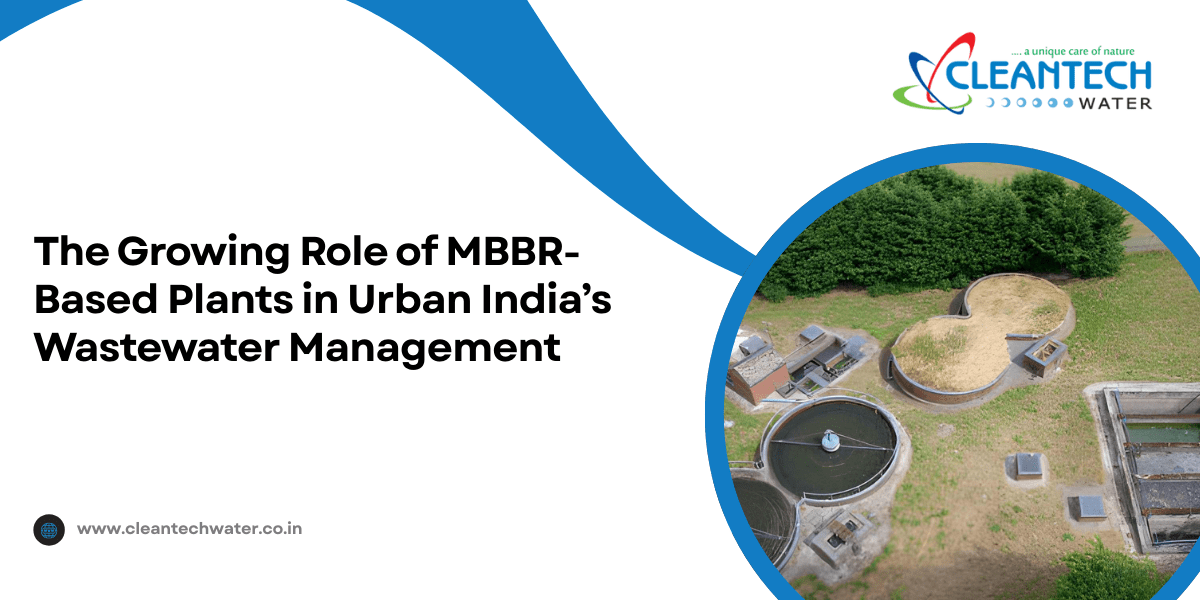
What Is MBBR Technology?
The MBBR (Moving Bed Biofilm Reactor) is a wastewater treatment process that combines the benefits of both activated sludge processes and fixed-film biological treatment. This technology uses small, free-floating plastic carriers (bio-media) within the reactor, where microorganisms (biofilm) grow and degrade organic pollutants as the wastewater moves through the system. MBBR technology is especially known for its compact design, low energy consumption, and resilience to fluctuating loads.
In an MBBR-based sewage treatment plant, the wastewater undergoes biological treatment in the presence of these biofilm carriers, providing a large surface area for microbial growth. This allows for efficient removal of contaminants, including biochemical oxygen demand (BOD), chemical oxygen demand (COD), ammonia, and nitrogen. The process is highly effective in treating both municipal sewage and industrial wastewater, making it ideal for diverse applications across urban and industrial sectors.
Why MBBR Is Perfect for Urban India’s Wastewater Management
India’s urban centres face a growing challenge of treating wastewater as cities continue to expand. The demand for wastewater treatment in urban areas has never been higher due to increasing population, urban migration, and industrial growth. The complexity of urban wastewater, which often consists of both domestic and industrial effluents, requires a solution that is both flexible and efficient. This is where MBBR-based sewage treatment plants stand out.
- Space-Saving Design: One of the biggest challenges in urban India is the scarcity of space. With increasing demand for land due to rapid urbanisation, finding suitable locations for large-scale sewage treatment plants has become difficult. MBBR technology offers a compact solution. Unlike traditional activated sludge systems that require large land areas for aeration tanks and secondary clarifiers, MBBR plants have a much smaller footprint. This makes them ideal for space-constrained locations, such as in densely populated urban areas where land is expensive and limited.
- High Treatment Efficiency: MBBR-based sewage treatment plants are known for their high treatment efficiency. They can efficiently remove organic pollutants, nitrogen, and ammonia from wastewater, which are critical parameters in sewage treatment. This high efficiency is particularly beneficial in urban India, where the volume and contamination levels of wastewater are consistently rising. MBBR technology ensures that treated water meets the stringent discharge norms required by regulatory authorities.
- Scalability and Flexibility: One of the key advantages of MBBR systems is their scalability. As cities expand, the amount of wastewater produced continues to rise. MBBR-based sewage treatment plants are highly adaptable to such changes. They can be easily expanded to accommodate growing demands by adding more bio-media or increasing reactor volume. This modular approach ensures that MBBR technology is not only effective for current needs but also flexible enough to meet future demands.
- Resilience to Load Fluctuations: In urban wastewater systems, the volume and composition of wastewater can fluctuate significantly. For example, industrial zones may generate wastewater with varying concentrations of pollutants, while municipal sewage flows may change depending on the time of day or season. MBBR technology is resilient to such fluctuations, as it can efficiently handle both high and low organic loads without compromising performance. This makes it an ideal choice for managing the complex and variable nature of urban wastewater.
- Low Maintenance Requirements: MBBR-based plants require relatively low maintenance compared to traditional sewage treatment plants. The bio-media used in MBBR systems do not need to be replaced frequently, and the process requires minimal operator intervention. Additionally, the self-regulating nature of the system means that it requires fewer adjustments during operation, making it an ideal solution for urban wastewater treatment, where resources for maintenance and operation may be limited.
- Energy Efficiency: Energy consumption is a significant concern in wastewater treatment, particularly in urban areas where plants run continuously. MBBR-based sewage treatment plants are energy-efficient due to their simpler aeration systems and the absence of bulky equipment like sludge recirculation pumps. The system operates at lower energy consumption, making it a more cost-effective solution in the long run, which is crucial in urban India where energy efficiency is an increasing concern.
MBBR Technology’s Contribution to Industrial Wastewater Treatment
Apart from municipal applications, MBBR-based sewage treatment plants are highly effective for treating industrial wastewater. Many industrial zones in India, particularly in states like Maharashtra, Gujarat, and Telangana, generate large volumes of wastewater with high organic and nitrogenous content. MBBR technology is ideal for such industries, including manufacturing, food processing, and chemical industries, due to its ability to treat complex wastewater with fluctuating loads.
In industrial settings, MBBR systems can be customised to meet the specific treatment requirements of various industries. The ability to retrofit existing treatment plants with MBBR systems makes it a viable option for upgrading older facilities to meet more stringent discharge standards. With rising environmental regulations and stricter compliance, industries in India are increasingly turning to MBBR-based wastewater treatment plants as a reliable solution for managing wastewater efficiently.
Benefits of MBBR-Based Sewage Treatment Plants for Urban Development
As urban areas in India continue to grow, it is imperative that wastewater management systems evolve to meet the increasing demands. MBBR technology offers a host of benefits for urban development projects, including:
- Compliance with Environmental Regulations: With stricter discharge norms being enforced across the country, especially in key industrial states like Maharashtra and Gujarat, MBBR technology ensures that treated water meets required standards for discharge or reuse.
- Improved Quality of Life: Effective wastewater treatment plays a critical role in maintaining public health and ensuring a clean environment in urban areas. MBBR-based sewage treatment plants contribute to cleaner water bodies, reduced pollution, and enhanced sanitation.
- Smart City Projects: As India moves towards the development of smart cities, MBBR-based sewage treatment plants are a natural fit. Their compact design, energy efficiency, and scalability align with the goals of smart city infrastructure, where sustainability and technological innovation are key priorities.
MBBR: A Solution for Expanding Cities in Madhya Pradesh, Maharashtra, Gujarat, Chhattisgarh, and Telangana
The states of Madhya Pradesh, Maharashtra, Gujarat, Chhattisgarh, and Telangana are experiencing rapid urbanisation and industrial growth, which is putting increasing pressure on wastewater management systems. The challenges of land acquisition, high treatment costs, and the need for scalable solutions make MBBR-based sewage treatment plants an attractive option for these regions.
In Madhya Pradesh and Chhattisgarh, where rapid industrialisation is taking place, MBBR technology offers a flexible solution that can scale with the growth of industrial estates. In Maharashtra and Gujarat, both of which have densely populated urban centres and large industrial hubs, the compact design of MBBR plants is crucial in managing wastewater efficiently within limited space.
Meanwhile, Telangana, with its burgeoning capital city Hyderabad, is focusing on modern infrastructure solutions, including wastewater treatment, to address the challenges posed by rapid urban growth. The state’s smart city initiatives are a prime opportunity for MBBR-based plants to be integrated into the urban fabric, offering sustainable and scalable wastewater treatment solutions.
Conclusion
The MBBR-based sewage treatment plant is an increasingly vital component of India’s wastewater management strategy, particularly in urban areas and industrial zones. With its high efficiency, space-saving design, and ability to handle fluctuating loads, MBBR technology is well-suited to meet the evolving needs of India’s rapidly expanding cities and industries.
As cities in Madhya Pradesh, Maharashtra, Gujarat, Chhattisgarh, and Telangana continue to grow, the adoption of MBBR-based wastewater treatment plants will play a crucial role in managing wastewater effectively, ensuring compliance with environmental regulations, and contributing to sustainable urban development. With the pressing need for scalable, cost-effective, and energy-efficient wastewater treatment systems, MBBR technology is poised to be at the forefront of India’s efforts to address its wastewater management challenges.
For industries and urban municipalities in India, investing in MBBR-based sewage treatment plants is not just a smart choice; it’s a necessary step toward building a cleaner, more sustainable future.
Frequently Asked Questions
1. How does MBBR technology compare to other wastewater treatment technologies?
MBBR technology stands out for its compact design, efficiency in handling variable loads, and reduced energy consumption. Unlike traditional activated sludge systems, MBBR requires less land space and offers modular scalability, making it ideal for both urban and industrial applications. It is also more resilient to load fluctuations and requires lower maintenance.
2. What are the key advantages of using MBBR in industrial wastewater treatment?
MBBR systems are particularly effective for industries with high organic loads, such as food processing, pharmaceuticals, and textiles. The technology’s ability to treat complex wastewater with varying pollutant concentrations makes it a preferred choice. Additionally, MBBR plants are easier to retrofit into existing industrial setups, enhancing treatment capacity without major infrastructural changes.
3. Can MBBR systems handle wastewater from multiple industries at once?
Yes, MBBR systems are highly adaptable and can treat wastewater from multiple industries simultaneously. The flexible design allows MBBR plants to accommodate mixed wastewater streams, making them suitable for industrial zones with diverse pollutant types. This versatility helps industries meet regulatory standards efficiently.
4. How much space does an MBBR-based sewage treatment plant require?
One of the key advantages of MBBR-based plants is their compact design. Compared to conventional wastewater treatment systems, MBBR systems occupy significantly less land space. This makes them particularly suitable for urban areas or industrial facilities where space is a premium and land acquisition is costly.
5. What is the lifespan of an MBBR-based sewage treatment plant?
MBBR systems typically have a long operational life, with proper maintenance and care. The bio-media used in MBBR systems are durable and resistant to fouling, ensuring that the plant remains operational for many years. Regular monitoring and maintenance can further extend the lifespan of the plant, making it a sustainable investment.
6. How does MBBR technology contribute to energy savings in wastewater treatment?
MBBR systems are designed to be energy-efficient. Their aeration systems are simpler than traditional treatment methods, reducing energy consumption. The compact nature of MBBR also means fewer mechanical components are required, further reducing operational energy costs, making it a more cost-effective solution in the long run.
7. Can MBBR-based plants be used for wastewater reuse or recycling?
Yes, MBBR-based sewage treatment plants can produce treated water suitable for reuse or recycling, depending on the required quality. By combining MBBR technology with additional filtration or disinfection processes, treated water can be reused for irrigation, industrial processes, or non-potable municipal purposes. This supports water conservation efforts in urban areas and industries.
Transform Your Wastewater Management with Cleantech Water’s Expert Solutions
At Cleantech Water, we are dedicated to providing innovative and efficient wastewater treatment plants that meet the unique needs of urban and industrial sectors. Our MBBR-based sewage treatment plants offer a cost-effective, space-saving, and scalable solution for managing wastewater in even the most challenging environments. Whether you’re in the heart of a bustling city or operating a large industrial facility, our advanced technology ensures that you stay ahead of environmental regulations while achieving optimal treatment efficiency.
With a strong presence in Madhya Pradesh, Maharashtra, Gujarat, Chhattisgarh, and Telangana, Cleantech Water has a proven track record of delivering high-quality, reliable wastewater treatment solutions across a range of industries. From municipal sewage treatment to industrial wastewater management, our systems are designed for flexibility, energy efficiency, and long-term performance.
Let Cleantech Water help you enhance sustainability, improve operational efficiency, and ensure compliance with stringent discharge norms. Contact us at +91-9099915539 / +91-9558996411 or email us at info@cleantechwater.co.in to learn how our custom wastewater treatment plants can benefit your facility and contribute to a cleaner, greener future.
Get in touch with Cleantech Water and make the smart choice for your wastewater treatment needs.