

The manufacturing landscape across India has shifted dramatically. Back in 2025, many factory heads faced severe delays when trying to scale up their production lines. Supply chain issues and regulatory red tape slowed down growth for everyone.
Today, in 2026, the demand for rapid industrial expansion is higher than ever. Companies want to add new shifts, build new facilities, and increase output immediately to capture market share. But there is a major bottleneck that catches many project managers by surprise. That hidden bottleneck is wastewater infrastructure.
When you expand a factory, you generate more industrial effluent. You also generate more domestic sewage from an increased workforce. Your existing waste management setup simply cannot handle this extra load. Upgrading traditional concrete treatment facilities takes months of planning and heavy construction.
This delay costs businesses millions in lost manufacturing revenue.
What Is the Fastest Way to Upgrade Industrial Wastewater Capacity?
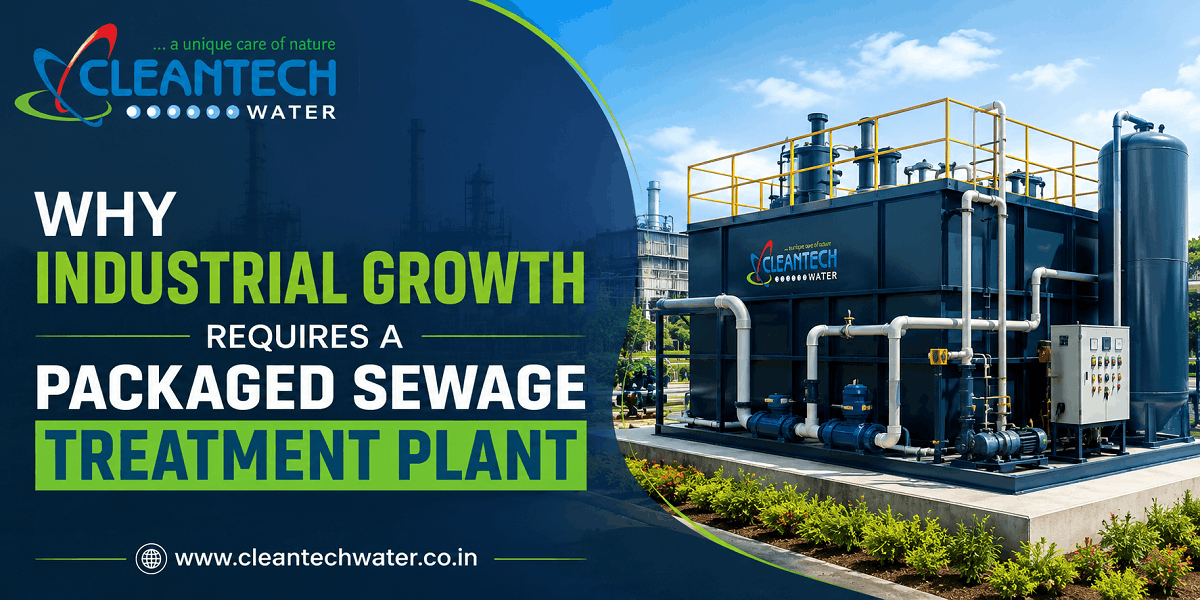
A packaged sewage treatment plant speeds up factory expansions by entirely eliminating the need for heavy civil construction. These pre-assembled systems arrive at your site ready to install. This plug-and-play approach allows factories to scale their wastewater capacity in days rather than months. It ensures uninterrupted production and provides instant regulatory compliance for expanding businesses.
We will look at how modern wastewater technology accelerates your factory expansion. We will explore how it protects your budget and guarantees uninterrupted operations.
What Delays Factory Expansions and Production Upgrades
Every plant head knows the timeline for installing new manufacturing equipment. You order the machinery and prepare the factory floor. You hire the operators and train the staff. But many leaders vastly underestimate the time required to upgrade their water infrastructure.
When production increases, biological oxygen demand and chemical oxygen demand levels spike immediately. Chances are, your existing treatment setup is already stretched to its absolute limit.
If you push more waste through an overloaded system, the biology fails. Untreated effluent then threatens local water bodies. This invites immediate regulatory action and hefty fines.
Building a conventional concrete treatment facility is a massive civil engineering project. It requires deep excavation and heavy material transport across your facility. You have to pour concrete and wait weeks for it to cure properly. Rain or bad weather halts the project entirely.
You also have to coordinate multiple contractors. You need teams for plumbing, electrical work, and biological seeding. This entire process can stall your factory expansion by six to eight months.
You cannot switch on your new production lines until the pollution control board approves your upgraded waste infrastructure. Every single day spent waiting on construction is a day of lost profits.
A modular sewage treatment plant solves this problem. It removes the unpredictable construction phase from your critical expansion path.
Compare the Setup Timeline of Both Systems
| Expansion Phase | Traditional Concrete Plant |
Packaged Sewage System |
| Site Preparation | 4 to 6 weeks of deep excavation | 2 to 3 days for a flat foundation |
| Construction | 8 to 12 weeks of pouring concrete | Zero days (built off-site) |
| Installation | 3 to 5 weeks for complex piping | 3 to 5 days for plug-and-play setup |
| Testing & Commissioning | 2 to 4 weeks | 1 week (pre-tested at the factory) |
| Total Project Time | 17 to 27 weeks | Less than 3 weeks |
As the table shows, relying on outdated construction methods severely limits your agility. Modern manufacturing demands speed and precision.
Bypass Heavy Civil Work and Deploy Infrastructure Faster
Time is your most valuable asset during a factory upgrade. A compact sewage treatment plant protects your timeline through intelligent off-site manufacturing.
Engineers build these modular systems inside a controlled factory environment. They assemble the tanks, install the pumps, and wire the automated controllers. All of this happens before the unit ever leaves the warehouse.
The system undergoes rigorous testing for leaks and performance before shipping. When it arrives at your industrial park, it is essentially a fully functional appliance. As a leading sewage treatment plant manufacturer, we design these systems for rapid deployment.
1. Pre-Assembled Units Eliminate On-Site Construction Time
Your factory floor remains active and profitable while you upgrade your wastewater capacity. Delivery trucks drop the prefabricated sewage treatment plant onto a basic prepared foundation. Technicians connect the inlet pipes, outlet pipes, and a power source. The entire physical installation often wraps up in a matter of days.
2. Non-Disruptive Installation Keeps Your Factory Floor Active
Traditional construction shuts down nearby roads or factory zones for months. Dust and debris threaten your sensitive manufacturing equipment. A packaged unit drops into place without stopping current manufacturing operations. Your core business continues making money while the infrastructure upgrade happens quietly in the background.
3. Compact Designs Reclaim Expensive Industrial Real Estate
Land inside established industrial estates is incredibly expensive today. Traditional open-tank sewage treatment plants consume massive plots of land that you could otherwise use for production. Packaged units feature a highly optimised footprint. Engineers design them to fit perfectly into tight corners or narrow alleys between buildings.
You can even opt for an underground sewage treatment plant configuration. This allows you to completely hide the system beneath parking lots or lawns. You keep your premium surface area strictly reserved for revenue-generating activities.
Match Wastewater Capacity Directly to Revenue Growth
Predicting manufacturing output for the next ten years is an impossible task. Market demands shift rapidly, and consumer trends change overnight. This unpredictability makes it very hard to size a traditional concrete treatment facility.
If you build a huge concrete plant for future capacity, you trap valuable capital. That money sits in unused infrastructure instead of funding marketing or research. If you build it too small, you face another painful expansion project in just two years.
A decentralised sewage treatment system introduces ultimate flexibility to your capacity planning. You only buy the exact treatment capacity you need today.
Let us look at a real-world scenario involving a textile manufacturer. Suppose you are adding one new dyeing line this quarter. You can install a single small sewage treatment plant rated for that specific volume.
Next year, you secure a massive export contract. You now need to add three more production lines to meet the demand. You do not have to tear down your old water infrastructure. You simply order another modular unit and place it right next to the first one.
They connect seamlessly to form a larger, unified network. You can easily pair an industrial sewage treatment plant for factory chemicals with a domestic sewage treatment plant built just for the new staff cafeteria.
This phased approach keeps your capital expenditure aligned strictly with your actual revenue growth. You never overbuild, and you never fall short of capacity. Scalability is the ultimate competitive advantage in the 2026 industrial sector.
Satisfy Stricter 2026 Environmental Mandates Without Stress
Environmental compliance is stricter now than it has ever been. Regulatory bodies are demanding higher standards from industrial operators. The Central Pollution Control Board enforces rigid effluent standards across all manufacturing sectors. State boards actively monitor discharge points in heavy industrial zones.
During a factory expansion, regulatory scrutiny intensifies significantly. Inspectors want to see how you plan to handle the increased waste volume.
Failing to provide a robust and modern solution results in denied environmental clearances. This immediately halts your entire factory expansion. Authorities will not let you operate new machinery if you cannot handle the resulting pollution safely.
A CPCB-compliant sewage treatment plant acts as a powerful insurance policy for your compliance record. These modern units utilise highly advanced biological processes to break down complex industrial pollutants. They consistently produce clear and odourless water that easily meets all stringent discharge standards.
Many local regulators actively prefer these modern systems. They know that a modular sewage treatment plant offers predictable and automated results. Showing the authorities that you are installing state-of-the-art sewage treatment technology often smooths the approval process.
You can move forward with your expansion goals safely. You completely avoid any threat of unexpected factory shutdowns or legal penalties. Deploying reliable sewage treatment equipment proves to stakeholders that you prioritise sustainable industrial growth.
Protect Your Capital Expenditure and Bottom-Line ROI
Financial leaders look at factory expansions through the strict lens of risk and return on investment. Traditional civil projects carry massive financial risks. Contractors frequently exceed budgets due to material cost fluctuations or weather delays.
A packaged sewage treatment plant offers deep financial predictability. It provides a much faster path to profitability for the modern CFO. When you invest in advanced sewage treatment solutions, you are fundamentally improving your facility’s operational efficiency.
1. Fixed Project Costs Shield You From Market Volatility
When you purchase a prefabricated unit, you get a fixed and guaranteed quote. The manufacturer builds it in their facility, shielding you from local labour shortages or raw material price hikes. You know what the system will cost and when it will arrive. This financial predictability makes budget approvals much easier for corporate boards.
2. Recycled Greywater Slashes Daily Freshwater Utility Bills
Water scarcity continues to drive up municipal water tariffs for commercial users. A high-quality wastewater recycling system treats your effluent to such a strict standard that you can reuse it immediately.
Factories route this clean water back into their cooling towers and boiler feeds. They use it for floor washing and landscaping. By operating your own sewage recycling plant on-site, you drastically reduce your reliance on expensive freshwater tankers.
3. Automated Operations Reduce Expensive Manual Labour
Older concrete plants require dedicated teams of operators. They have to manually adjust valves and monitor chemical feeds around the clock. Handling sludge manually is both expensive and hazardous.
Modern sewage treatment plants feature intelligent IoT controllers. These sensors monitor the biological health of the system in real time. They automatically adjust aeration levels and pump speeds based on the current inflow. This eliminates the need to hire a large dedicated team to monitor the plant manually.
5-Year Financial Impact on Your Operations
Let us review the financial impact over a five-year operating period.
|
Cost Category |
Traditional Concrete System |
Packaged Modular System |
| Initial Capital Expenditure | Highly variable and prone to overruns | Fixed quoted price |
| Installation Labor Costs | Very high (months of contractor work) | Very low (days of setup) |
| Freshwater Utility Bills | High (water is discarded after treatment) | Low (treated water is recycled) |
| Daily Operator Salaries | High (requires full-time manual teams) | Low (automated IoT monitoring) |
| Future Expansion Costs | High (requires new civil construction) | Low (just add another module) |
The numbers clearly favour modern, modular technology. The reduced civil costs and lower daily operational expenses mean the system pays for itself incredibly fast. You achieve a positive return on investment in a fraction of the time compared to older technologies.
Applications Across Diverse Commercial Sectors
While we have focused heavily on manufacturing, this technology is universally adaptable. The need for rapid deployment spans across multiple industries. Any facility that generates wastewater can benefit from bypassing heavy civil construction.
A commercial sewage treatment plant is ideal for large tech parks and corporate campuses. These environments experience fluctuating daily populations. Modular systems adjust their biological processing automatically to handle the difference between a busy Tuesday and an empty Sunday.
Real estate developers rely on a residential sewage treatment plant to get new housing societies approved faster. Installing a modular system allows developers to hand over possession to homeowners without waiting for municipal sewer lines.
Whether it is a remote mining camp needing a sewage water treatment plant or a newly built shopping mall, the core benefits remain identical. You save time, you save space, and you guarantee compliance.
Choosing the right partner is crucial for the success of these installations. You need an experienced sewage treatment plant supplier who understands the specific effluent profile of your industry. A cookie-cutter approach does not work for complex industrial runoff.
The biological chemistry required to treat textile dye is vastly different from the chemistry needed for food processing waste. Your supplier must custom-engineer the internal components of the packaged plant to match your exact waste profile.
Secure Your Manufacturing Water Supply for the Next Decade
The industrial sector in India is expanding at an unprecedented rate. Moving forward, water independence will dictate which factories succeed and which ones halt production. You cannot rely on overloaded municipal infrastructure to support your aggressive growth targets.
Owning a reliable sewage treatment plant is no longer just an environmental obligation. It is a critical piece of operational infrastructure. It ensures that your production lines never stop due to a lack of water or a failed compliance inspection.
By treating and reusing your own wastewater, you insulate your business from external supply shocks. You project a strong image of corporate responsibility to your global clients. Most importantly, you unlock the ability to scale your operations as fast as the market demands.
Partner with Cleantech Water for Your Next Upgrade
Do not let outdated water management slow down your manufacturing goals this year. As a premier STP plant manufacturer in India, Cleantech Water understands the urgency of industrial expansion.
Our engineering team customises, builds, and maintains highly efficient wastewater solutions tailored for tough industrial environments. We deliver robust systems that bypass construction delays and get your facility fully operational in record time.
If you are planning a facility upgrade or facing compliance challenges, we have the exact sewage treatment plant in India that you need. We handle everything from the initial effluent analysis to the final on-site commissioning.
Connect with our engineering team today to design a custom modular setup for your next factory upgrade. Call us at +91-9099915539 / +91-9558996411 to secure your industrial water future and keep your production lines moving forward.