

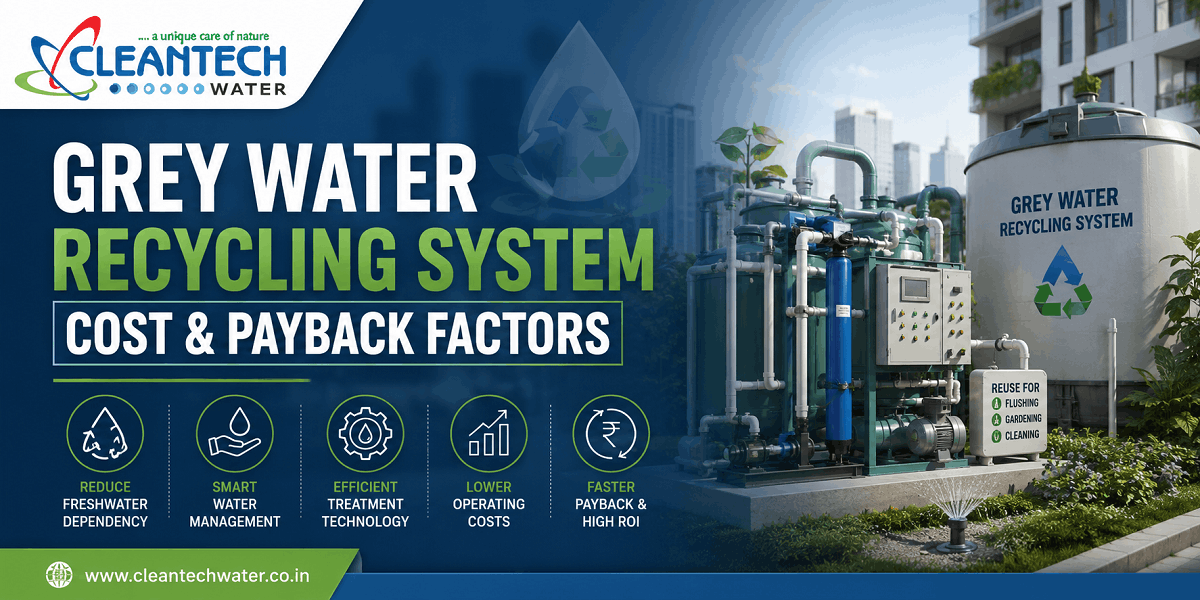
Freshwater is becoming a serious operating concern for apartments, hotels, commercial buildings, institutions, and industries in India. Many facilities now depend on tanker water, borewell extraction, or an inconsistent municipal supply for daily operations. At the same time, sustainability goals and water reuse expectations are becoming stronger.
This is why grey water recycling is moving from a “green building” feature to a practical water management decision. A well-designed system can treat lightly used wastewater from bathrooms, wash basins, showers, laundry areas, and selected utility streams for non-potable reuse.
However, the cost of a grey water recycling system installation is not the same for every site. It depends on water quantity, source quality, reuse application, treatment technology, plumbing readiness, automation, civil work, and long-term maintenance needs.
Direct Answer
The cost of grey water recycling systems in India depends on capacity, greywater quality, reuse purpose, treatment technology, plumbing work, automation, installation scope, and maintenance needs. Payback depends on how much treated water is reused and how much freshwater or tanker water the facility can avoid.
What Are Grey Water Systems?
Grey water systems are treatment and reuse setups designed to collect wastewater from non-toilet sources and make it suitable for selected non-potable uses.
Common greywater sources include:
- Bathroom wash basins
- Showers and bathing areas
- Laundry areas
- Handwash stations
- Utility washing zones
- Selected commercial or institutional wash areas
Greywater is different from blackwater. Blackwater comes from toilets and contains higher pathogen and organic contamination risks. Greywater is usually less contaminated, but it still requires proper treatment before reuse.
A reliable grey water treatment plant usually includes collection, screening, equalisation, treatment, filtration, disinfection, treated water storage, and reuse distribution. The system must be designed around actual site conditions rather than a generic equipment package.
|
Water Stream |
Typical Source | Treatment Level |
Common Reuse |
| Greywater | Basins, showers, laundry | Moderate to advanced | Flushing, gardening, and cleaning |
| Blackwater | Toilets | High | Requires sewage treatment |
| Treated sewage | STP outlet | High to tertiary | Landscaping, flushing, and utility use |
| Rainwater | Rooftop/runoff | Filtration and storage | Recharge, irrigation, washing |
For buyers, the important point is simple: grey water systems are not priced only by capacity. They are priced by the treatment result the site needs.
How Grey Water Recycling Works
Grey water recycling works by collecting used water before it mixes with sewage, treating it, and reusing it for non-drinking applications.
A standard process may include:
- Source segregation: Greywater is collected through separate lines so it does not mix with toilet waste.
- Screening: Hair, lint, soap particles, and larger solids are removed.
- Equalisation: The flow is balanced, so the treatment system receives water at a stable rate.
- Biological or physical treatment: Organic matter, suspended solids, odour-causing compounds, and pollutants are reduced.
- Filtration: A greywater filtration system improves clarity and removes finer particles.
- Disinfection: UV, ozone, chlorine, or other methods may be used depending on reuse needs.
- Reuse distribution: Treated water is sent to flushing lines, landscaping systems, cleaning points, or other approved non-potable uses.
This is where the cost starts changing. A simple reuse goal may need basic filtration and disinfection, while a high-quality reuse application may need membrane-based greywater treatment, ultrafiltration water recycling, or tertiary polishing.
Types of Grey Water Recycling Systems
The right grey water recycling systems depend on building type, water source, reuse demand, and expected outlet quality.
1. Basic Filtration and Disinfection Systems
These systems are usually suited for simpler non-potable reuse, where the incoming greywater is relatively predictable. A basic grey water purification system may include screening, filtration, and disinfection.
This type of setup may be considered for low-risk applications such as landscape irrigation or limited cleaning use, depending on water quality.
2. Biological Greywater Treatment Systems
Biological wastewater treatment systems use microorganisms to reduce organic load. These systems are useful when greywater contains soaps, detergents, and biodegradable contaminants.
They are often used in apartments, hotels, hostels, campuses, and commercial buildings with regular daily water generation.
3. MBR and Membrane-Based Systems
An MBR wastewater treatment system combines biological treatment with membrane filtration. It can offer consistent treated water quality and a smaller footprint compared with some conventional systems.
Membrane-based greywater treatment is useful when the site needs better clarity, stable output, or compact treatment infrastructure.
4. Tertiary Treatment and Polishing Systems
Tertiary water treatment systems add another layer of polishing after primary or biological treatment. These may include sand filters, activated carbon filters, ultrafiltration, UV, ozone, or advanced oxidation process water treatment.
This may be needed when the reuse application demands higher water quality or stronger odour and microbial control.
5. Decentralised Greywater Systems
A decentralised wastewater treatment system treats water close to where it is generated. This can be useful for large campuses, residential townships, hotels, institutions, and industrial sites.
Decentralised water reuse systems can reduce load on external infrastructure and make treated water reuse easier to manage within the property.
Key Factors That Affect Grey Water Recycling System Cost
The cost of grey water recycling system projects depends on a combination of technical, civil, operational, and site-specific factors.
1. Daily Greywater Generation Capacity
Capacity is one of the first cost drivers. A larger system needs bigger tanks, pumps, filtration units, treatment reactors, control panels, and reuse distribution capacity.
But capacity should not be guessed. It should be calculated based on actual water generation and realistic reuse demand.
For example, a hotel may generate significant greywater from guest bathrooms and laundry, but the reuse plan must match actual demand for flushing, cleaning, and landscaping.
2. Source of Greywater
Not all greywater is equal.
Greywater from showers and wash basins is usually easier to treat than water from laundry or mixed utility streams. Laundry water may contain detergents, lint, surfactants, and a higher chemical load.
The more complex the source, the more carefully the greywater treatment systems must be designed.
3. Incoming Water Quality
The quality of incoming greywater affects treatment technology and operating cost.
Key parameters include:
- Suspended solids
- Oil and grease
- Detergent load
- Organic matter
- Turbidity
- Odour potential
- pH variation
- Microbial load
If these factors are ignored, the system may face clogging, smell, inconsistent treated water quality, or high maintenance.
4. Intended Reuse Application
The reuse purpose strongly affects system design.
| Reuse Application | Treatment Requirement |
Cost Impact |
| Gardening | Moderate, depending on water quality | Lower to medium |
| Toilet flushing | Better clarity and odour control | Medium |
| Floor cleaning | Stable quality and filtration | Medium |
| Hotel reuse | Higher reliability and hygiene control | Medium to high |
| Commercial building reuse | Consistent daily output | Medium to high |
| Industrial utility reuse | Site-specific treatment | Variable |
Water reuse in commercial buildings often needs more reliable treatment because the system supports daily washroom and facility operations. Similarly, grey water recycling in hotels and resorts needs careful design because guest comfort and hygiene expectations are high.
5. Treatment Technology Selected
Technology has a direct impact on cost and payback.
A simple greywater filtration system may cost less initially, but it may not be suitable for complex greywater. Advanced technologies such as MBR, ultrafiltration, activated carbon polishing, ozone, or AOP may increase the initial investment but improve reliability and treated water quality.
The goal is not to choose the cheapest technology. The goal is to choose the right treatment for the reuse purpose.
6. Plumbing and Retrofitting Requirements
This is one of the most underestimated cost factors.
New projects can plan separate greywater and treated water lines from the beginning. Existing buildings may need retrofitting, which can involve pipe routing, shaft access, civil modifications, and downtime planning.
That is why real estate water recycling systems are more cost-effective when planned during the design stage.
7. Automation and Monitoring
Manual systems may appear economical, but they depend heavily on operator discipline.
Automated grey water recycling systems can include:
- Flow meters
- Level sensors
- Dosing control
- Filter pressure indicators
- Pump automation
- Alarms
- Treated water quality monitoring
- Remote monitoring options
Automation improves reliability, especially for commercial grey water recycling systems, hotels, campuses, and industries.
8. Material and Equipment Quality
Pumps, membranes, tanks, filters, valves, control panels, and piping quality affect performance and maintenance.
Low-quality components may reduce initial cost but increase breakdowns, replacements, complaints, and service dependency.
For long-term payback, the lifecycle cost matters more than only the purchase cost.
CAPEX vs OPEX: What Buyers Should Understand
A proper evaluation should separate a one-time investment from recurring operating costs.
| Cost Type | What It Includes |
Why It Matters |
| CAPEX | Equipment, tanks, civil work, plumbing, electricals, installation | Defines initial project investment |
| OPEX | Electricity, chemicals, consumables, testing, cleaning, AMC | Defines long-term operating cost |
| Lifecycle Cost | CAPEX + OPEX + maintenance + replacements | Shows real cost over time |
A system with low CAPEX but high maintenance may not deliver good payback. A well-designed system may require a higher initial investment but provide more stable reuse and lower operational issues.
What Affects Payback in Grey Water Recycling?
Payback depends on actual water savings, not just installed capacity.
Important payback drivers include:
- Daily treated water reuse volume
- Freshwater cost avoided
- Tanker water dependency reduced
- Non-potable demand available on-site
- Operating days per year
- Maintenance cost
- Electricity and consumables
- Water testing requirements
- System uptime
- Future water scarcity risk
A simple payback formula is:
Payback Period = Total Project Investment ÷ Net Annual Water Savings
Where:
Net Annual Water Savings = Avoided freshwater/tanker/discharge cost – Annual operating cost.
This formula should use the buyer’s actual water cost, reuse volume, and O&M assumptions. Without those inputs, payback becomes only a rough estimate.
Case-Based Example: Housing Society
Consider a residential complex with regular water demand for flushing, gardening, and common area cleaning. The society generates greywater daily from bathrooms and washing areas.
A residential grey water treatment system can improve payback if:
- Separate plumbing is available or feasible
- Treated water can be reused daily
- The society depends on tanker water
- Landscaping and flushing demand are consistent
- Residents support reuse for non-potable purposes
If the building has no treated water distribution line, the project may need additional plumbing work. That increases initial cost but may still be justified if long-term tanker dependency is high.
This is why grey water systems for apartments should be assessed through both engineering and usage planning.
Case-Based Example: Hotel or Resort
A hotel’s grey water recycling system has a different cost logic. Hotels generate water from guest bathrooms, laundry, housekeeping, and service areas.
The payback can be stronger when treated water is reused for:
- Toilet flushing
- Garden irrigation
- Outdoor cleaning
- Back-of-house cleaning
- Utility washing
But hotels also require higher reliability. Odour, poor clarity, or system downtime can affect guest experience. Therefore, grey water recycling in hotels and resorts often needs better automation, filtration, and disinfection than a basic system.
Case-Based Example: Commercial Building
For offices, malls, corporate parks, hospitals, and institutions, commercial water reuse systems can support flushing, landscaping, and housekeeping.
The key payback factor is occupancy. If building occupancy is high and washroom use is regular, treated water reuse becomes more predictable.
This is also where corporate water management solutions and smart water management for industries become valuable. Facility teams can track treated water generation, reuse volume, and freshwater savings through metering and monitoring.
Industrial and Commercial Reuse Considerations
Industries may need industrial wastewater treatment solutions along with sewage and grey water treatment solutions. A factory may treat greywater separately or combine water reuse planning with STP, ETP, RO, or other treatment systems.
Common industrial water reuse applications include cleaning, utility washing, gardening, flushing, and process-support applications where suitable.
A professional industrial water treatment plant manufacturer will evaluate water quality, reuse purpose, discharge expectations, and operating risk before recommending technology.
In some industries, zero liquid discharge solutions (ZLD) may also be part of a broader reuse strategy. Greywater recycling alone is not the same as ZLD, but it can support the larger goal of reducing freshwater intake and wastewater discharge.
Why the Cheapest System May Not Give the Best Payback
A low-cost system can become expensive if it fails to perform.
Common problems include:
- Undersized tanks
- Poor source segregation
- Inadequate filtration
- Odour complaints
- Frequent pump failures
- Manual operation errors
- Poor water clarity
- No reliable disinfection
- High maintenance frequency
- Weak after-sales support
This is why buyers should not compare only the initial quotation. They should compare design quality, treated water output, O&M needs, automation, service support, and expected system life.
A reliable, eco-friendly wastewater treatment system should reduce water stress without creating daily operational problems.
Questions to Ask Before Finalising a System
Before choosing grey water system installation services, ask:
- Which greywater sources are suitable at our site?
- What sources should be excluded?
- What is the expected daily greywater generation?
- What treated water quality is required for our reuse purpose?
- Which technology is recommended and why?
- Is biological treatment, MBR, UF, or tertiary treatment needed?
- What civil and plumbing changes are required?
- What is the expected OPEX?
- What automation and monitoring are included?
- What happens during system downtime?
- What AMC and service support are available?
- Can the system be expanded later?
These questions help buyers identify whether a proposal is technically strong or only commercially attractive.
Why Choose Professional Greywater Recycling Solutions
Choosing the right grey water recycling plant manufacturer in India is critical because every site has different water quality, reuse goals, and installation limitations.
A professional wastewater treatment plant supplier in India such as Cleantech Water should provide:
- Site assessment
- Water quality testing
- Capacity calculation
- Technology selection
- Custom design
- Installation planning
- Commissioning support
- Operator training
- Maintenance planning
- Long-term service support
Cleantech Water works as a water recycling plant company in India and a turnkey wastewater treatment solutions provider for facilities that need reliable, practical, and scalable wastewater recycling systems.
From commercial grey water recycling systems to environmental water treatment solutions, water conservation systems, and sustainable water management solutions, the right partner helps buyers make decisions based on performance, not assumptions.
Conclusion
The cost of grey water recycling systems in India depends on more than system size. Capacity, source water quality, treatment technology, plumbing readiness, reuse purpose, automation, maintenance needs, and site conditions all influence the final investment and long-term payback. A well-planned system can help apartments, hotels, commercial buildings, institutions, and industries reduce freshwater use, lower tanker dependency, and improve water security. However, the best results come from proper assessment, not generic equipment selection. By choosing the right technology and reuse strategy, facilities can turn grey water recycling into a practical, sustainable, and cost-effective water management solution.
Plan a Smarter Grey Water Recycling System
Every site has different water sources, reuse needs, space limitations, and operating priorities. That is why your grey water recycling project should begin with expert evaluation, not guesswork. Cleantech Water helps apartments, hotels, commercial buildings, real estate projects, and industries design reliable grey water recycling systems based on actual water quality, reuse goals, installation requirements, and long-term payback factors.
From system design and technology selection to installation support and maintenance planning, our team helps you build a solution that is practical, scalable, and performance-focused. Connect with Cleantech Water at +91-9099915539 or +91-9558996411 to plan a smarter water reuse system.